
Whether you’re a weekend warrior hitting the tennis courts, a competitive swimmer pushing through laps, or a CrossFit enthusiast chasing personal records, your shoulders take a beating. Here in Charlotte, NC, we see athletes from all backgrounds — from youth baseball players to marathon runners — dealing with shoulder pain that sidelines their performance and disrupts their training. The shoulder is one of the most mobile and complex joints in the human body, which makes it incredibly versatile but also vulnerable to injury. Understanding how to protect your shoulders and recover effectively when problems arise can mean the difference between achieving your athletic goals and sitting on the bench frustrated.
What makes athletes particularly susceptible to shoulder injuries? The shoulder’s exceptional range of motion comes at the cost of stability. Unlike your hip joint, which fits snugly into a deep socket, your shoulder sits in a shallow socket that relies heavily on muscles, tendons, and ligaments for support. Repetitive overhead movements, sudden impacts, poor mechanics, and muscle imbalances create the perfect storm for injury in athletic populations.
Table of Contents
- Understanding the Athletic Shoulder: Anatomy and Function
- Common Shoulder Injuries in Athletes
- Risk Factors That Increase Injury Vulnerability
- Evidence-Based Prevention Strategies
- How Chiropractic Care Supports Shoulder Health
- A Comprehensive Recovery Approach
- Practical Exercises for Shoulder Stability
- When to Seek Professional Care
- Myths vs. Facts About Shoulder Injuries
Understanding the Athletic Shoulder: Anatomy and Function
Your shoulder isn’t just one joint — it’s actually a complex system of multiple joints working together. The glenohumeral joint (ball-and-socket) provides most of your arm’s movement, while the acromioclavicular joint connects your collarbone to your shoulder blade, and the scapulothoracic joint allows your shoulder blade to glide across your ribcage. This intricate design allows you to throw a baseball, swim the butterfly stroke, or lift weights overhead, but it also creates multiple points where things can go wrong.
The rotator cuff — four muscles that wrap around the shoulder joint like a cuff — plays a critical role in stabilizing your shoulder during movement. These muscles (supraspinatus, infraspinatus, teres minor, and subscapularis) work together to keep the ball centered in the socket while your larger muscles like the deltoid provide power. When this coordination breaks down due to fatigue, weakness, or poor mechanics, injury risk skyrockets.
Athletes rely on a delicate balance between mobility and stability. Swimmers need extreme range of motion, while football players need robust stability to withstand impacts. Gymnasts require both simultaneously. Understanding this balance helps explain why different sports create different shoulder problems and why prevention strategies must be sport-specific.
Common Shoulder Injuries in Athletes
At Feel Good Chiropractic And Wellness, we work with Charlotte athletes experiencing a wide range of shoulder conditions. Rotator cuff strains and tears are among the most common, particularly in overhead athletes like pitchers, tennis players, and volleyball players. These injuries can range from minor inflammation to partial or complete tears that significantly limit function and cause substantial pain.
Shoulder impingement syndrome occurs when the space between your rotator cuff and the bony arch above it (the acromion) narrows, causing pinching and inflammation with overhead movements. This condition often develops gradually through repetitive motion and poor posture, making it particularly common in swimmers and throwing athletes. Many athletes describe it as a persistent ache that worsens with specific movements, especially reaching overhead or behind the back.
Labral tears affect the ring of cartilage that deepens the shoulder socket and provides stability. These injuries are frequently seen in contact sports, weightlifting, and activities involving repetitive overhead motion. Athletes often report a catching sensation, deep shoulder pain, and a feeling of instability or the shoulder “giving out” during activity.
Shoulder instability and dislocations represent another significant category. When the ligaments that hold the shoulder in place become stretched or torn, the joint can partially dislocate (subluxation) or completely dislocate. This is particularly common in contact sports like football and hockey, but can also occur in gymnastics and wrestling. Once a shoulder dislocates, it becomes more prone to future dislocations without proper rehabilitation.
Biceps tendinitis, inflammation of the long head of the biceps tendon where it passes through the shoulder joint, frequently affects weightlifters, rowers, and overhead athletes. This condition causes pain in the front of the shoulder that may radiate down the upper arm, especially during lifting or reaching movements.
Risk Factors That Increase Injury Vulnerability
Understanding what puts athletes at higher risk helps target prevention efforts effectively. Repetitive overhead motion stands out as the single biggest risk factor across multiple sports. Baseball pitchers, swimmers, volleyball players, and tennis players perform thousands of overhead movements, creating cumulative stress on shoulder structures that can exceed the tissue’s ability to recover and adapt.
Muscle imbalances create uneven forces across the shoulder joint. Many athletes overdevelop their chest and front shoulder muscles while neglecting the posterior shoulder and upper back. This imbalance pulls the shoulder forward, narrows the subacromial space, and sets the stage for impingement. Research indicates that even small strength discrepancies between internal and external rotators can significantly increase injury risk.
Poor scapular mechanics — what sports medicine professionals call scapular dyskinesis — affects how your shoulder blade moves and positions itself during arm movement. When the muscles controlling your shoulder blade (like the serratus anterior and trapezius) don’t coordinate properly, it alters the mechanics of the entire shoulder complex. This is incredibly common in athletes and often overlooked until injury occurs.
Training errors contribute substantially to shoulder problems. Rapidly increasing training volume or intensity, inadequate rest between sessions, and poor technique all stress shoulder tissues beyond their capacity to adapt. Here in Charlotte, we see this frequently with athletes who jump into new training programs too aggressively or who ignore early warning signs of overuse.
Previous shoulder injuries increase the likelihood of future problems, especially if rehabilitation was incomplete. Scar tissue, persistent weakness, altered movement patterns, and residual instability can all predispose athletes to re-injury or new problems in the same shoulder.
Evidence-Based Prevention Strategies
Prevention represents your best strategy for maintaining shoulder health throughout your athletic career. A properly designed warm-up prepares shoulder tissues for the demands ahead. Dynamic stretching, gradual intensity build-up, and sport-specific movement preparation increase blood flow, improve tissue temperature, and activate the neuromuscular system. Evidence suggests that athletes who consistently perform structured warm-ups experience fewer shoulder injuries than those who skip this critical step.
Strengthening the rotator cuff and scapular stabilizers should be non-negotiable for all athletes, regardless of sport. External rotation exercises with resistance bands, prone shoulder extension (Y-T-W patterns), and exercises that challenge scapular control help build the foundation for healthy shoulder function. These exercises don’t need to be complicated or time-consuming — even ten minutes three times weekly can make a significant difference.
Maintaining proper posture throughout your day matters more than many athletes realize. Rounded shoulders and forward head posture that develop from desk work, smartphone use, and driving can carry over into your athletic performance. This postural dysfunction changes shoulder mechanics and increases impingement risk. Being mindful of posture and incorporating thoracic spine mobility work helps counteract these effects.
Monitoring training load prevents the cumulative fatigue that precedes many shoulder injuries. Tracking throwing counts for baseball players, swim yardage for swimmers, and training volume for weightlifters allows you to identify when you’re approaching risky territory. Progressive overload — gradually increasing demands over time — allows tissues to adapt and strengthen rather than breaking down.
Cross-training reduces repetitive stress by varying movement patterns and distributing load across different tissues. A swimmer who also does yoga, a pitcher who incorporates lower body training, or a weightlifter who adds mobility work gives overused structures time to recover while maintaining overall fitness.
How Chiropractic Care Supports Shoulder Health
Chiropractic care offers athletes a conservative, non-invasive approach to both preventing and addressing shoulder problems. At Feel Good Chiropractic And Wellness, Dr. [Doctor Name] works with Charlotte athletes to optimize shoulder function through comprehensive assessment and individualized care plans that address the whole kinetic chain, not just the painful area.
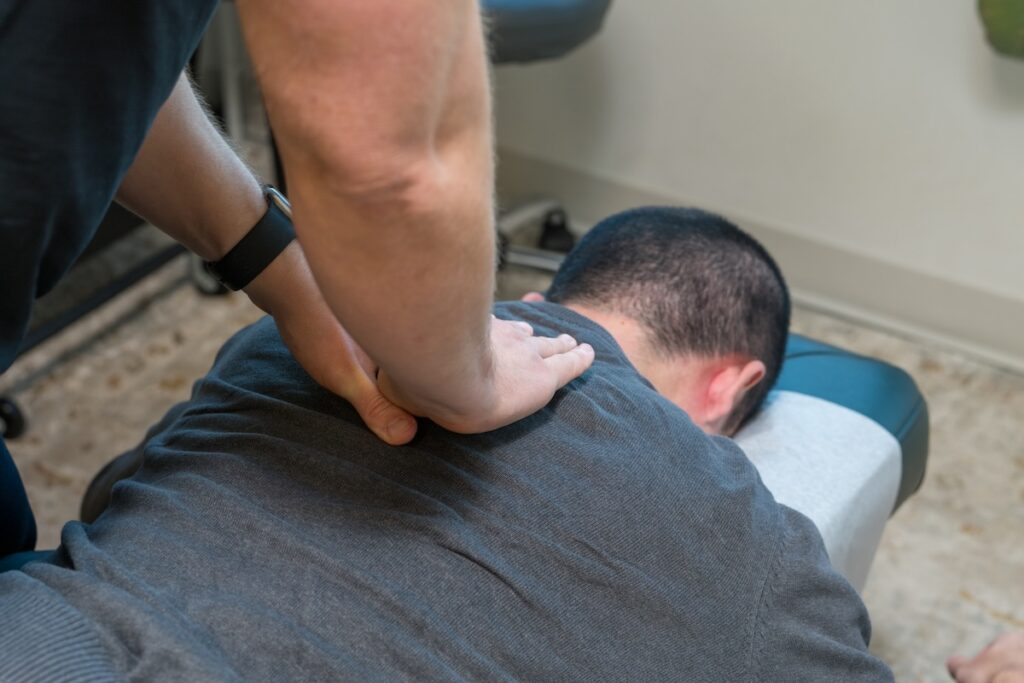
Shoulder problems rarely exist in isolation. The relationship between your spine, ribcage, and shoulder blade directly affects shoulder mechanics. Restrictions in thoracic spine mobility can force compensatory movement at the shoulder joint, creating abnormal stress patterns. Chiropractic adjustments to the thoracic spine and ribs can restore proper motion, allowing the shoulder to move through its full range with better mechanics.
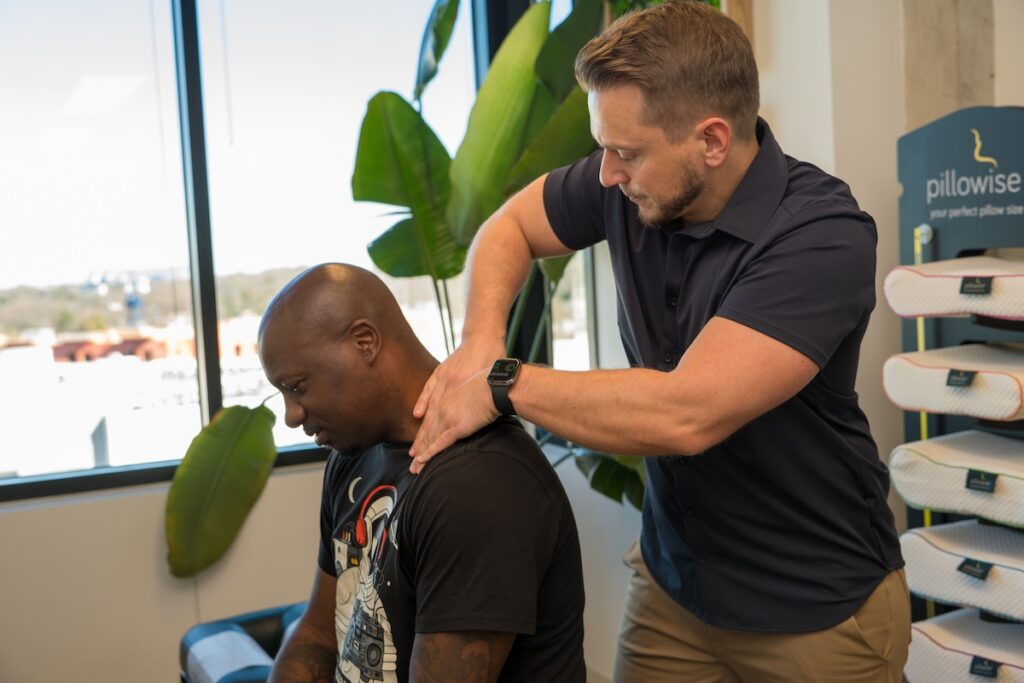
The acromioclavicular joint and sternoclavicular joint — where your collarbone meets your shoulder blade and sternum respectively — also influence shoulder function. When these joints become restricted or misaligned, they alter the entire shoulder complex’s movement patterns. Specific adjustments to these areas can help restore normal biomechanics and reduce stress on vulnerable structures like the rotator cuff.
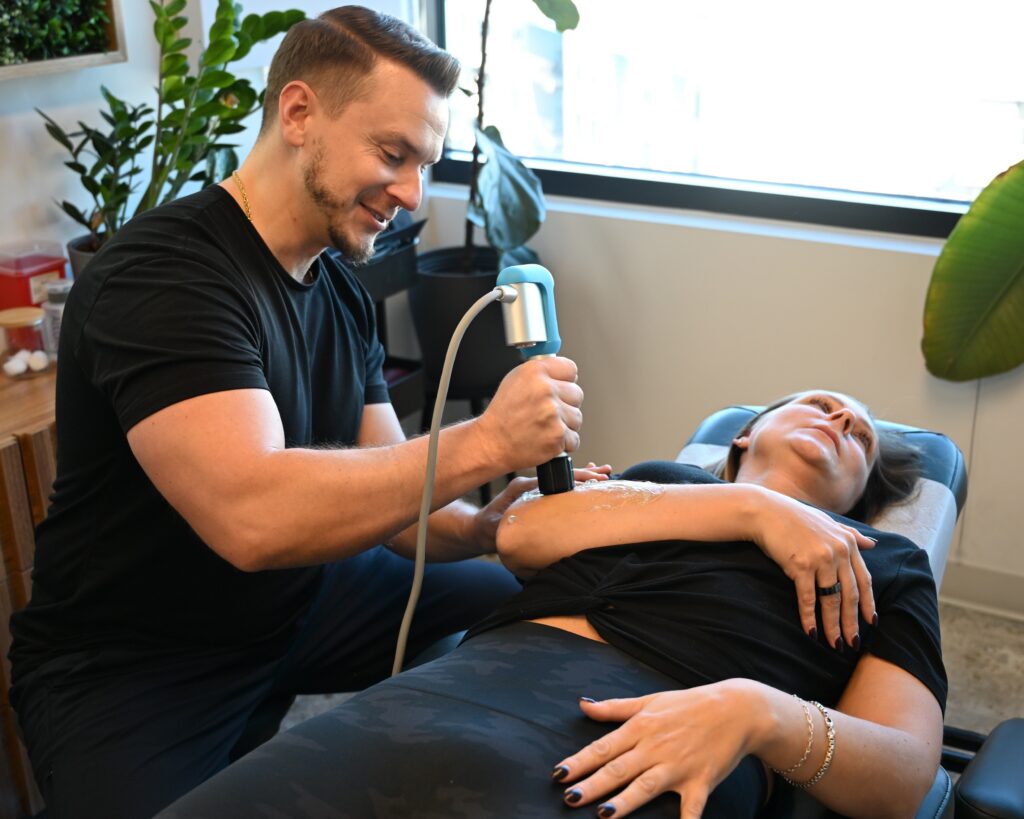
Soft tissue techniques address muscle tension, trigger points, and fascial restrictions that limit mobility and contribute to pain. Many athletes develop tight pectoralis minor muscles, which pull the shoulder forward and contribute to impingement. Active release techniques, instrument-assisted soft tissue mobilization, and targeted stretching can address these restrictions effectively.
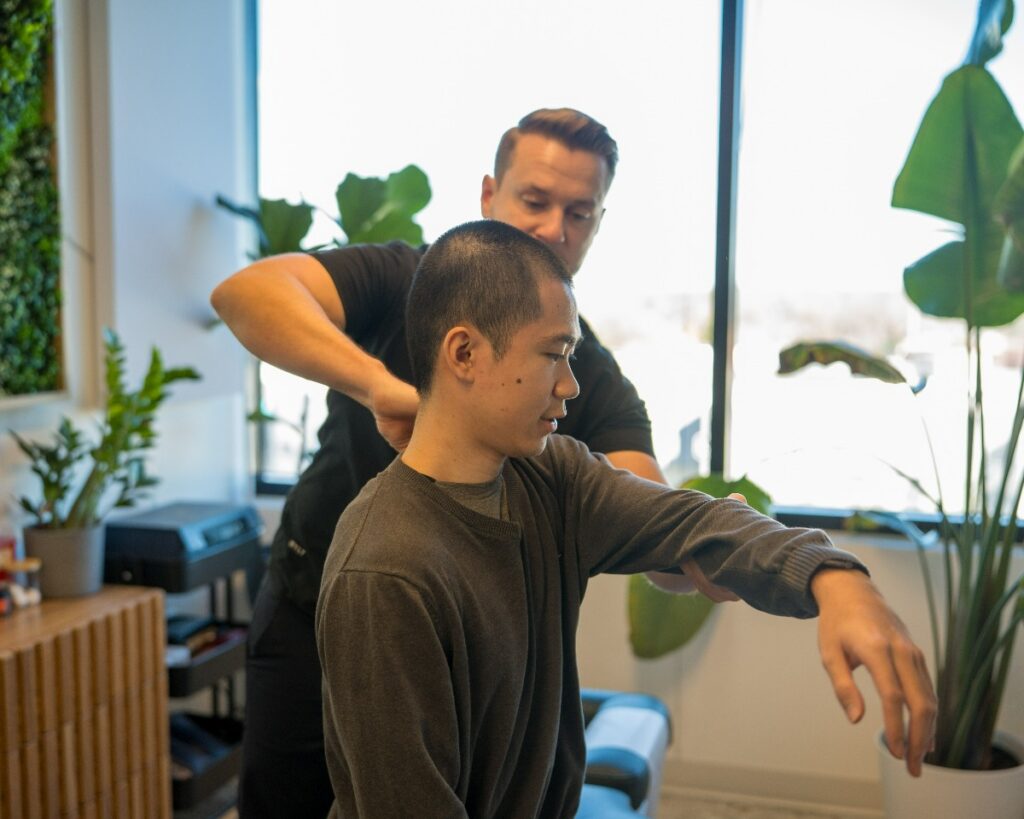
What a typical care plan looks like depends entirely on your specific situation, sport demands, and goals. Initial visits focus on thorough assessment — evaluating posture, movement patterns, strength, range of motion, and identifying contributing factors beyond the shoulder itself. Treatment may include joint adjustments, soft tissue work, therapeutic exercises, and education about mechanics and training modifications. The goal isn’t just symptom relief but addressing underlying dysfunction to prevent recurrence.
Many athletes find that regular chiropractic maintenance care helps them stay ahead of problems. Monthly or bi-monthly visits during heavy training periods allow early identification of developing issues before they become injuries that sideline performance.
A Comprehensive Recovery Approach
When shoulder injury does occur, effective recovery requires a multi-faceted approach tailored to the specific injury and athlete. The initial phase focuses on reducing pain and inflammation while protecting healing tissues. This doesn’t necessarily mean complete rest — in fact, prolonged immobilization can lead to stiffness and weakness that delays return to sport. Instead, relative rest involves avoiding aggravating activities while maintaining general fitness through modified training.
Pain management through natural approaches aligns well with chiropractic philosophy. Ice application in the acute phase helps control inflammation, while later stages may benefit from heat to increase blood flow and tissue extensibility. Gentle range of motion exercises, when appropriate, prevent stiffness without stressing healing structures. The key is finding the sweet spot between adequate rest and beneficial movement.
As pain subsides, the focus shifts to restoring full range of motion, rebuilding strength, and retraining movement patterns. This progressive rehabilitation phase is critical — returning to sport with incomplete recovery sets the stage for re-injury. Exercises progress from isolated rotator cuff strengthening to integrated movement patterns that mimic sport-specific demands.
Proprioception and neuromuscular control — your body’s awareness of joint position and ability to coordinate muscle activation — often become impaired after injury. Balance exercises, rhythmic stabilization drills, and plyometric training help restore these qualities. Research has shown that athletes who complete comprehensive neuromuscular training have lower re-injury rates than those who focus solely on strength.
The return-to-sport phase requires careful progression through sport-specific movements at gradually increasing intensities. A pitcher works through a structured throwing program, a swimmer increases yardage systematically, a weightlifter rebuilds load capacity methodically. Rushing this phase — perhaps the most common mistake athletes make — dramatically increases the likelihood of setback.
Practical Exercises for Shoulder Stability
Incorporating specific exercises into your routine can significantly improve shoulder resilience. External rotation with resistance bands strengthens the infraspinatus and teres minor, key rotator cuff muscles that often become weak relative to internal rotators. Stand with your elbow bent at ninety degrees and tucked against your side, holding a resistance band. Rotate your forearm outward against resistance while keeping your elbow stationary. Perform two to three sets of twelve to fifteen repetitions several times weekly.
The prone Y-T-W series targets scapular stabilizers and posterior shoulder muscles. Lying face-down on a bench or stability ball, raise your arms into a Y position (thumbs up, arms angled upward), then a T position (straight out to the sides), then a W position (elbows bent, hands near shoulders). These simple movements, performed with light weights or just body weight, activate muscles critical for healthy shoulder mechanics. Start with two sets of ten repetitions for each position.
Wall slides improve scapular control and upward rotation. Stand with your back against a wall, arms in a W position against the wall. Slowly slide your arms upward into a Y position while maintaining contact with the wall and preventing your lower back from arching. This exercise challenges the serratus anterior and lower trapezius, muscles that frequently test weak in athletes with shoulder problems. Perform two sets of twelve to fifteen repetitions, focusing on smooth, controlled movement.
Sleeper stretches address posterior shoulder tightness common in throwing athletes. Lying on your involved side with your shoulder and elbow both at ninety degrees, use your opposite hand to gently press your forearm toward the floor, stretching the back of your shoulder. Hold for thirty seconds, repeat three to four times. This stretch helps maintain internal rotation flexibility, which tends to decrease in overhead athletes.
Plank variations with perturbations challenge shoulder stability in a functional way. In a plank position (on hands or forearms), have a partner apply gentle, random pushes to your shoulders or torso while you resist and maintain position. This unpredictable loading trains the neuromuscular system to react quickly and maintain joint stability. Start with fifteen to twenty seconds and gradually increase duration as control improves.
When to Seek Professional Care
Knowing when shoulder discomfort requires professional attention helps prevent minor issues from becoming major problems. Persistent pain lasting more than a week or two despite rest and self-care warrants evaluation. While some muscle soreness after training is normal, pain that interferes with daily activities, disrupts sleep, or progressively worsens suggests something more significant.
Loss of range of motion compared to your opposite shoulder or inability to perform movements that were previously easy indicates potential injury. If you can’t reach overhead, behind your back, or across your body without significant restriction or pain, professional assessment is appropriate. Similarly, weakness that goes beyond normal training fatigue — dropping objects, inability to hold your arm in certain positions, or marked strength loss — should be evaluated.
Clicking, popping, or grinding sensations accompanied by pain may indicate labral tears, cartilage damage, or other structural problems. While some shoulder sounds are benign, painful mechanical symptoms deserve attention. A feeling of instability, the shoulder “giving out,” or sensation that it might dislocate suggests ligamentous laxity or labral damage requiring professional care.
Certain red flags warrant immediate medical evaluation rather than waiting for a chiropractic appointment. Shoulder pain following trauma with visible deformity, inability to move the arm, or severe swelling requires emergency assessment to rule out fracture or dislocation. Pain radiating down your arm with numbness or tingling, especially if accompanied by neck pain, might indicate nerve involvement or cervical spine issues. Shoulder pain associated with chest pain, shortness of breath, or other systemic symptoms requires immediate emergency evaluation to rule out cardiac or other serious medical conditions.
At Feel Good Chiropractic And Wellness in Charlotte, NC, we encourage athletes to seek care early. What starts as minor discomfort can progress to significant injury if ignored, potentially sidelining you for months instead of days or weeks. Early intervention typically leads to faster recovery and better outcomes.
Comparison Table: Common Shoulder Injuries in Athletes
| Injury Type | Common Sports | Typical Symptoms | Primary Risk Factors |
|---|---|---|---|
| Rotator Cuff Strain/Tear | Baseball, tennis, swimming, volleyball | Pain with overhead motion, weakness, night pain | Repetitive overhead activity, poor mechanics, muscle imbalance |
| Shoulder Impingement | Swimming, throwing sports, weightlifting | Pinching pain with arm elevation, limited range, catching sensation | Forward shoulder posture, rotator cuff weakness, overuse |
| Labral Tear | Contact sports, gymnastics, weightlifting | Deep shoulder pain, catching, instability, loss of power | Trauma, repetitive overhead motion, shoulder instability |
| Shoulder Instability/Dislocation | Football, hockey, wrestling, rugby | Feeling of shoulder “slipping out,” apprehension, recurrent subluxation | Previous dislocation, ligament laxity, contact sports participation |
| Biceps Tendinitis | Weightlifting, rowing, swimming, throwing | Front shoulder pain, tenderness along biceps groove, pain with lifting | Overuse, poor lifting mechanics, shoulder impingement |
Myths vs. Facts About Shoulder Injuries in Athletes
Myth: You should “work through” shoulder pain during training
Fact: While some muscle fatigue is normal, pain is your body’s warning signal that something is wrong. Training through pain typically makes injuries worse and delays recovery. The phrase “no pain, no gain” does not apply to joint or tendon pain — distinguishing between productive training discomfort and potentially harmful pain is crucial for long-term shoulder health.
Myth: Rest is the best treatment for all shoulder injuries
Fact: While acute injuries may require initial rest, prolonged immobilization often leads to stiffness, weakness, and delayed recovery. Evidence indicates that appropriate movement and progressive loading, when properly timed and dosed, promote healing and restore function more effectively than extended rest alone. The key is finding the right balance between protection and beneficial stress.
Myth: Shoulder injuries only affect overhead athletes
Fact: While overhead athletes face higher risk for certain injuries, shoulder problems affect athletes across all sports. Runners can develop shoulder issues from poor posture and arm swing mechanics. Cyclists experience shoulder pain from prolonged handlebar positioning. Even sports without obvious shoulder involvement can create problems through compensation patterns, poor posture, or whole-body mechanics that stress the shoulder complex.
Myth: Once your shoulder feels better, you’re fully recovered
Fact: Pain resolution doesn’t equal complete healing or readiness to return to sport. Underlying weakness, limited range of motion, altered movement patterns, and incomplete tissue healing often persist after pain subsides. Research has shown that athletes who return to sport based solely on pain relief have significantly higher re-injury rates than those who complete comprehensive rehabilitation addressing strength, mobility, and neuromuscular control.
Myth: Chiropractic care is only for back and neck problems
Fact: Chiropractors are trained in the assessment and conservative management of extremity joints, including the shoulder. Chiropractic care addresses not only the shoulder joint itself but also related areas like the thoracic spine, ribs, and scapula that directly influence shoulder mechanics. Many athletes find that comprehensive chiropractic care addresses their shoulder problems more completely than approaches that focus narrowly on the painful area alone.
Final Thoughts
Your shoulders are remarkable structures that enable athletic performance across countless sports and activities. Protecting them through smart training practices, targeted strengthening, and attention to mechanics allows you to pursue your athletic goals for years to come. When problems do arise, addressing them early with appropriate conservative care typically leads to faster recovery and better long-term outcomes.
Here in Charlotte, the athletes we work with at Feel Good Chiropractic And Wellness come from diverse backgrounds with varied goals — from high school athletes pursuing scholarships to weekend warriors maintaining active lifestyles. What unites them is the understanding that shoulder health requires proactive attention, not just reactive treatment when pain strikes. Whether you’re dealing with a current shoulder issue or looking to prevent problems down the road, understanding how your shoulders work, what puts them at risk, and how to support their function empowers you to make informed decisions about your training and care.
Remember that every athlete’s situation is unique. What works perfectly for one person may not be ideal for another. Individualized assessment and personalized care plans that consider your specific sport, goals, movement patterns, and individual anatomy provide the foundation for optimal shoulder health and athletic performance.
Frequently Asked Questions
How long does it typically take to recover from a shoulder injury?
Recovery time varies widely depending on the specific injury, severity, and individual factors. Minor rotator cuff strains might improve within two to four weeks with appropriate care, while more significant tears or labral injuries may require several months of rehabilitation. Completing the full recovery process rather than rushing back based on pain relief alone significantly reduces re-injury risk.
Can I continue training while recovering from a shoulder injury?
In most cases, modified training that avoids aggravating movements while maintaining overall fitness is beneficial and preferable to complete rest. A swimmer with shoulder pain might focus on kicking drills, a pitcher might emphasize lower body conditioning, or a weightlifter might work on unaffected muscle groups. Working with a healthcare provider helps identify safe modifications specific to your injury and sport.
Are shoulder injuries more common in certain age groups of athletes?
Shoulder injury patterns do vary across age groups. Younger athletes, particularly those in growth spurts, may be more susceptible to growth plate injuries and overuse conditions from repetitive sport specialization. Middle-aged athletes often experience degenerative changes and decreased tissue resilience. However, proper training, adequate recovery, and preventive strengthening benefit athletes of all ages in reducing injury risk.
Will shoulder surgery be necessary for my injury?
Most shoulder injuries respond well to conservative care including chiropractic treatment, physical rehabilitation, and training modifications. Surgery is typically reserved for complete tendon tears, significant labral damage with instability, or cases that don’t improve with several months of appropriate conservative treatment. Many athletes successfully return to full activity without surgical intervention when they commit to comprehensive rehabilitation.
How can I tell if my shoulder pain is serious or just normal soreness?
Normal training soreness typically affects muscles broadly, improves within forty-eight hours, and doesn’t significantly limit your range of motion. Pain that’s sharp, localized to a specific point, limits movement, persists beyond a few days, worsens with specific activities, or interferes with sleep suggests something more than routine soreness and warrants professional evaluation.
Should I use ice or heat for shoulder pain?
Ice is generally most helpful in the first forty-eight to seventy-two hours after acute injury or following activities that aggravate your shoulder, helping control inflammation and pain. Heat can be beneficial for chronic stiffness, warming up tissues before activity, or addressing muscle tension. However, the specific injury and phase of healing influence which modality is most appropriate, so individualized guidance from your healthcare provider ensures you’re using the right approach at the right time.
TL;DR – Key Takeaways
- The shoulder’s exceptional mobility comes at the cost of stability, making it vulnerable to injury in athletes across all sports, not just overhead activities.
- Prevention through rotator cuff and scapular strengthening, proper warm-up, training load management, and posture awareness significantly reduces injury risk.
- Common athletic shoulder injuries include rotator cuff strains, impingement syndrome, labral tears, instability, and biceps tendinitis, each requiring specific management approaches.
- Chiropractic care addresses shoulder problems comprehensively by treating not only the shoulder joint but also related areas like the thoracic spine and ribs that influence shoulder mechanics.
- Effective recovery requires progressive rehabilitation that restores range of motion, strength, and neuromuscular control before returning to full sport participation — pain relief alone doesn’t indicate complete healing.