Cranial Facial Release (CFR) helps people breathe better, often when nothing else has helped. This gentle, non-surgical technique opens up the nasal passages, relieving pain and pressure in the sinuses, making it easier to breathe through your nose and sleep more comfortably.
Why Breathing Problems So Often Don’t Resolve on Their Own
If you’re here, chances are you’ve already tried the usual options such as sprays, medications, nasal strips, rinses, maybe even CPAP or had a conversation about surgery. Some may have helped a little, but probably didn’t last.
For many people, chronic nasal breathing issues aren’t just about inflammation, allergies, or mucus. They’re about restricted space. When the bones of the face and skull don’t move or align the way they should, the nasal passages can become narrowed, making it difficult to move air, no matter how “clear” your sinuses are.
This is why so many people leave their ENT feeling frustrated by “normal” exams, yet they still can’t breathe well through their nose. And why treatments aimed at calming symptoms often fall short, they don’t address the underlying structure that’s reducing the airflow.
Understanding why this happens is often the first time things start to make sense.
How Cranial Facial Release Works
Cranial Facial Release focuses on increasing space and restoring movement to the bones of the face and skull that directly affect nasal airflow.
Over time, injury, stress, dental work, orthodontics, chronic mouth breathing or even birth trauma can cause restrictions in the facial skeleton. When that happens, the nasal passages can become narrowed and restrict your breathing, especially during sleep.
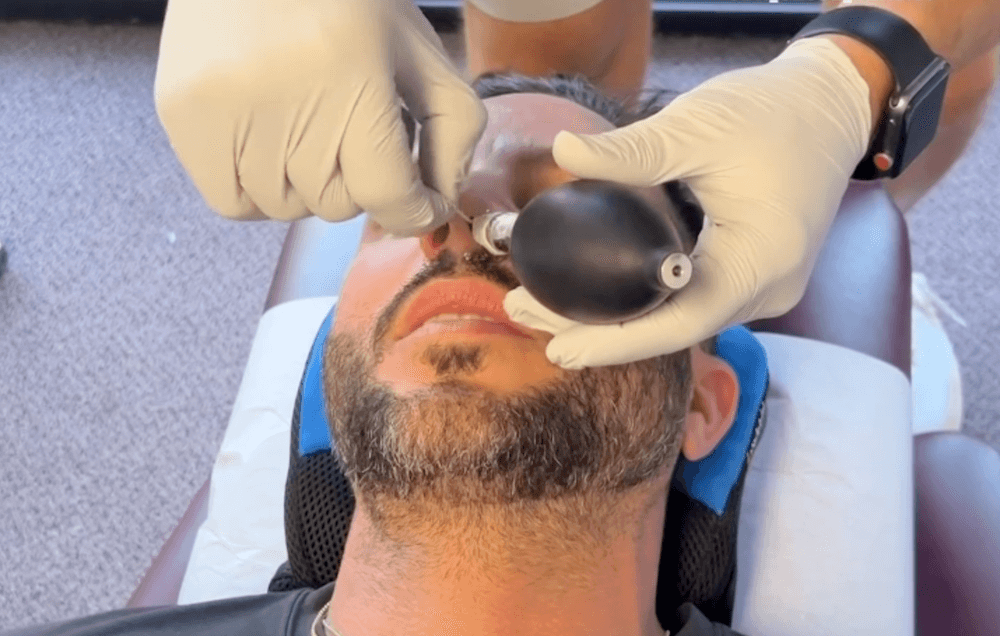
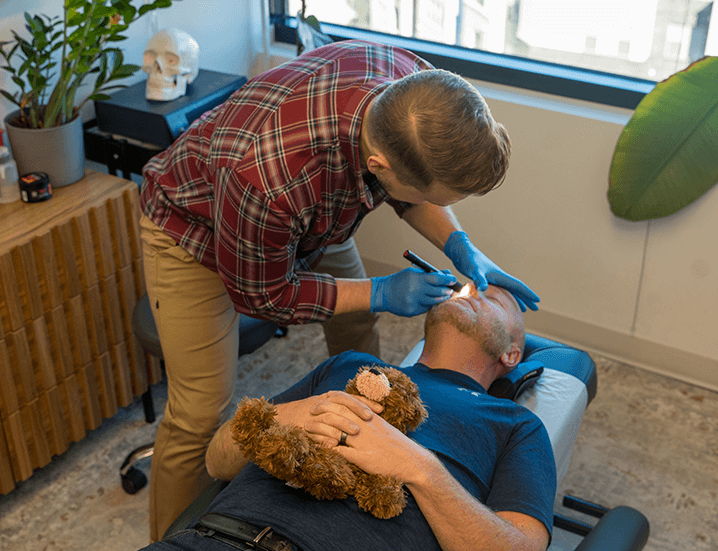
CFR uses a small balloon, inserted into the nose, to help release these restrictions and opens up the airway. As airflow improves, other functions improve as well, such as mucous drainage, pressure management and lymphatics. For many people, this can make breathing feel easier, quieter, and less effortful, while improving sleep, energy and mood.
Who Cranial Facial Release Is For
Cranial Facial Release may be a good fit if you:
Struggle to breathe comfortably through your nose
Feel chronically congested even when you’re not sick
Snore, mouth-breathe, or wake up feeling unrested
Have sinus pressure or facial tightness without a clear explanation
Have tried medications, sprays, or devices with limited or temporary relief
Have been told surgery is the only remaining option, but want to explore a conservative approach first
CFR is especially appealing to people who sense that something structural is limiting their breathing, even when imaging or exams haven’t provided clear answers.
Who It May Not Be For
CFR is not intended to replace emergency care, acute medical treatment, or surgical intervention when those are clearly indicated. Some conditions require co-management with an ENT or other medical provider, and CFR is not positioned as a cure-all.
The goal is simple: to determine whether improving facial and cranial structure could meaningfully improve how you breathe.
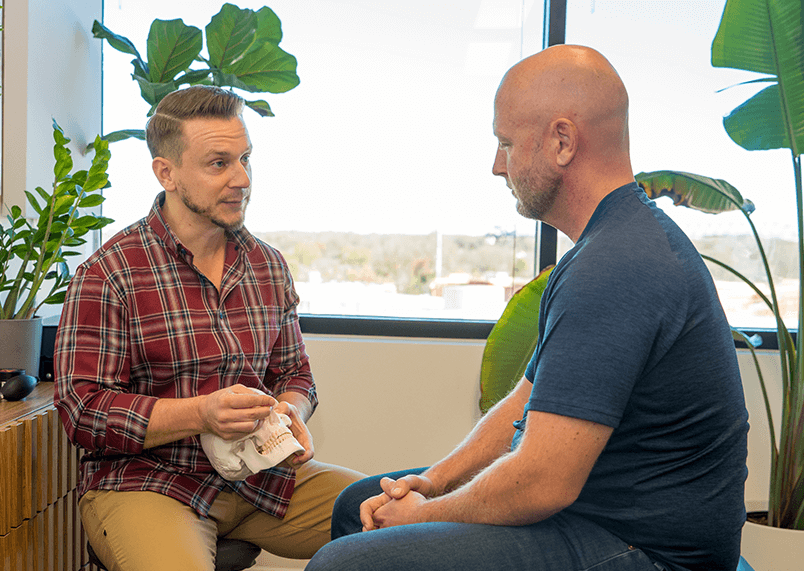
Your CFR visit begins with a focused evaluation to understand how your facial structure, nasal airflow, and breathing patterns are functioning. This helps determine whether CFR is appropriate for you and how it may be approached.
The procedure itself is brief, lasting about 1-2 seconds per side and is performed while you’re comfortably positioned. Most people describe the sensation as pressure rather than pain.
In order to complete the technique, CFR requires 5 visits scheduled over 2-3 weeks. Some notice changes in breathing immediately, while others experience gradual improvement over the series of visits. It’s common to feel a sense of lightness or relief through the face and sinuses afterward.
You’ll be guided through what to expect as your body adjusts, with the goal of making the process feel clear, safe, and well-supported from start to finish.
What People Often Notice After Cranial Facial Release
Everyone’s experience is different, but many people report noticeable changes following CFR, sometimes immediately, other times gradually over a series of visits.
Commonly reported changes include:
Easier breathing through the nose, especially at rest
Less facial or sinus pressure
Reduced mouth breathing during the day or at night
Quieter breathing or snoring
A feeling of openness or lightness through the face
Some people notice subtle improvements at first that continue to build over time. Others feel a more obvious shift right away. Both responses can be normal.
Because CFR works by improving structure and space rather than masking symptoms, changes tend to feel more functional and the results tend to be long lasting. It may be recommended to have an occasional visit to maintain your new airway, with most people opting for a CFR visit every 4-6 months.
Most people describe CFR as uncomfortable, but tolerable. The sensation is more like pressure than pain. The technique is brief, and you’re guided through what to expect the entire time.
This varies from person to person, but every new patient will initially undergo a series of 5 visits. 90% of people will have experienced meaningful change after 5 visits, but others may need a few more treatments to get the desired effect. Recommendations are based on your individual presentation and response.
Medications and sprays are designed to reduce inflammation or symptoms. CFR focuses on improving the structural space that airflow depends on, which is why it can help when symptom-based approaches haven’t lasted.
When performed by a trained provider, CFR is considered a conservative, non-surgical approach. As with any hands-on technique, not everyone is a candidate, which is why proper evaluation is important.
Many people seek CFR because nasal airflow plays a major role in sleep quality. While results vary, improved nasal breathing can positively influence sleep and nighttime breathing patterns.
No. CFR is not intended to replace medical or surgical care when those are clearly indicated. It is often explored as a conservative option before or alongside other treatments.
Many people experience lasting changes, especially once proper structure and breathing patterns are restored. Individual results depend on factors like anatomy, habits, and overall health.
Why Choose Cranial Facial Release at Feel Good Chiropractic?
Cranial Facial Release is highly specialized. The outcome depends not just on the technique itself, but on the evaluation, precision, and experience of the provider performing it.
At Feel Good Chiropractic, Dr Jesse approaches CFR thoughtfully and conservatively — with an emphasis on proper assessment, clear communication, and individualized care. Each person’s facial structure, breathing pattern, and response are different, and care is never rushed or standardized.
You’ll be guided through whether CFR is appropriate for you, what to expect, and how it fits into your overall health and breathing goals. If CFR isn’t the right next step, that conversation is just as important.
Take the Next Step
If you’re struggling with nasal breathing and want to explore whether Cranial Facial Release is a good fit, the next step is a focused evaluation.
This visit is designed to assess structure, airflow, and expectations and to help you make an informed decision about your care.
My husband and I have been seeing Dr Czajka for years (on and off as needed) - he’s legit, patient focused, knows his stuff - so grateful to have access to him! Great location, too - right off Park Rd.
I can’t recommend Jesse enough. I came in dealing with some pretty stubborn lower back pain, and after just a few sessions, I’m feeling significantly better. He is professional, actually listens to your concerns, and explains his adjustments clearly. Highly recommend!
After several months of pain in my leg and a doctor visit or two, I had no hope it would get better. That was until I went to see Dr Jesse on a friends recommendation. Dr Jesse cured my problem within a few visits, and my leg feels as good as new!
I’ve been going to Dr. Jesse for the last 10 or so years to help with all sorts of ailments. He’s helped me get past chronic pain in my back and helps to keep me aligned when needed. On top of that, when I was having issues breathing related to a deviated septum, he helped to fix that issue as well. I couldn’t recommend him enough.
Dr. Jessie is amazing. He put my 9 year old at ease. He starts on time, which is so rare for a chiropractor. My son could not breathe out of his nose at all. After 5 visits he is breathing out of his nose and sleeping better at night. I can already see his health improving. Thank you Dr. Jesse!!!
Recently completed cranial facial release treatments. Dr Czajka took great interest in understanding my full treatment goals and actually takes the time to reassure and explain every step of the process with great detail. Would for sure recommend to anyone.
Dr. Jesse is an amazing chiropractor! I’ve had severe neck, shoulder, and back pain for years, and was referred to Dr. Jesse by my personal trainer. From my first visit, he took the time to understand my pain points and addressed the most serious areas first using the muscle scraping tool, followed by precise back and neck adjustments. After just one session, I noticed about a 35% reduction in stiffness around my neck and shoulders!<br>His cupping sessions are also excellent — they help release muscle tension and improve blood flow, speeding up recovery.<br>I also recommend trying the Pillowise pillows available at his office. They’re customized to your neck, shoulder, and body dimensions — truly a game changer for quality sleep.<br>Dr. Jesse genuinely listens, cares, and ensures you see results. I highly recommend visiting him regularly to fine-tune your body and relieve pain!
Dr. Jesse is amazing! Very caring and respectful. He makes you feel like you’re part of his family. Our son and our family are forever grateful! Great and clean atmosphere too. Great location! God bless you Dr. Jesse!
Dr. Jesse is truly one of a kind - not only as a chiropractor but also as a friend and advocate for personal health. When I could hardly walk, drive, or sleep from my back injury, he went above and beyond with his care, tailoring his support to my situation and helping me through the toughest days. He also helped me discover my gluten sensitivity, which changed my psoriasis journey and my life. He is compassionate, knowledgeable, and genuinely cares about his patients. I can honestly say he gave me back my quality of life, and I hope this review reaches someone searching for a chiropractor who combines professionalism with both expertise and heart. He’s a gem!
“Dr. Jesse is awesome! He has a great ability to pinpoint exactly where I need adjusting and really understands my needs. The Cranial Facial Relief treatments have been super beneficial, and I always leave feeling better. Highly recommend!”
Best practice in Charlotte hands down! Dr. Jesse Czajka is very knowledgeable and very trustworthy when it comes to adjusting my back and neck. Would recommend 10/10
I visit Dr. Jesse Czajka monthly for neck and shoulder adjustments, as well as whenever I incur injuries. His exceptional knowledge of anatomy has always enabled him to resolve any issues I’ve had. He’s also incredibly personable and easy to talk to.<br><br>Throughout my life, I’ve visited numerous chiropractors, and I can confidently say that I would highly recommend him to friends and family.<br><br>Sent from my iPhone
Dr J - my go to, thanks for always knowing how to put me back together. As I love to be active, your keen insight on the mechanics of my body allows me the ability for being to do more! Highly recommend Dr J with a dose of patience!
Dr. Jesse is amazing! I first came to him because I had a shoulder injury that was bugging me. He was able to identify the issue and help resolve it to where I am back to working out without pain! His knowledge, attention to detail, and commitment to continuously learning not only makes him a great chiropractor, but great at overall health and wellness.
Dr Jesse is a fantastic chiropractor who does a great job educating his clients on many aspects regarding health and wellness. I have been adjusted by him for over a decade now and would highly recommend!
Doctor Feel Good is seriously the best! He doesn’t just crack your back and send you on your way. He actually takes the time to figure out what’s really causing your pain. He looks at the big picture and helps fix the problem from the inside out.<br><br>You can tell he truly cares about his patients. Every visit feels personal, and he explains everything in a way that actually makes sense. Since seeing him, my pain has gone way down and I feel better overall. I have more energy, more movement, less stiffness.<br><br>If you want a chiropractor who actually listens, digs into the root cause, and makes you feel taken care of, go see Doctor Feel Good. You won’t regret it!
Dr. Czajka is by far the BEST chiropractor around! He’s not the kind of chiropractor who just gives a quick adjustment and sends you on your way. He takes the time to understand the root cause of the problem, addressing not just the joints but also the muscles, posture, and overall wellness. His approach is about truly fixing the underlying issues so your body can hold the adjustments and function properly, rather than chasing temporary relief. I’ve noticed a HUGE difference since working with him, and I appreciate that every visit is personalized and thorough. If you want lasting results and a chiropractor who genuinely cares about your long-term health, this is the place to go.
I've been a patient of Dr J for years, and I can't recommend him highly enough. The level of care is consistently excellent. Over the years, the chiropractic care I've received has been a crucial part of my wellness routine, helping me manage pain and maintain a high quality of life.<br><br>I've also experienced the incredible benefits of cranial facial release work. It has been life-changing, providing relief that I didn't think was possible. Dr J is not only highly skilled but also genuinely compassionate and dedicated to helping his patients. If you're looking for a chiropractor who is truly invested in your long-term health, this is the place to go.
Really great experience! I’ve been seeing Dr. Jesse for 2 yrs now. I originally went in with some pretty bad neck, shoulder, back & hip tightness, and after a few adjustment and some dry needling, I felt so much better.<br>The relief is addicting!<br><br>Definitely my go-to chiropractor!
Embarking on a journey toward a healthier lifestyle, I came across Dr. Jesse and Feel Good Chiropractic—and I’m so glad I did. I wasn’t exactly sure what I needed but I knew it was time to start listening to my body and making changes.<br><br>What initially seemed like a typical chiropractic clinic turned out to be something much more. There’s a unique, welcoming energy at Feel Good Chiropractic that immediately sets it apart.<br><br>The process began with a phone consultation, which was a thoughtful and reassuring first step. Being able to talk through my concerns and goals before committing to an in-person visit really helped me feel at ease.<br><br>From the beginning, Jesse made me feel genuinely seen and understood—something I hadn’t experienced in other wellness settings. He’s not only highly professional and attentive, but also flexible, compassionate, and (bonus!) has a great sense of humor, which makes each session feel relaxed and comfortable.<br><br>If you’re looking for a place that goes beyond routine care and truly supports your wellness journey, I can’t recommend Feel Good Chiropractic enough!
Dr. Jesse does an excellent job. He has been helping me for a five years now off/on as needed. I really like his approach and has legit healed me numerous times. I recommend Jesse for anyone looking to improve their health.
It was a game changer dealing with my ability to breathe through my nostrils. This has been an issue my entire life, this process has been the only path for correction.
I have had the best experience knowing Dr. Czajka for several years now! He is thorough, informative, listens to specific needs, and utilizes practices beyond simply “adjusting” you at each visit. If you’re looking for someone that can provide knowledgeable functional medicine, he’s your guy.
When I had little hope in chiropractic help fixing my pain and figuring out what was wrong, Dr Jesse figured it out told me to trust the process that wouldn’t be fixed with a few sessions and now after being in pain for months I’ve been pain free and steadily feeling better after each visit
I can’t say enough about what Feel Good Chiropractic and Wellness has done for me especially when I’m in fight camp. As a professional fighter, my body takes a lot of damage, and every edge matters. Dr. J help me breathe better, recover faster, and perform at my peak.<br><br>I’ve been doing cranial facial release with them, and the difference in my breathing is unreal. After just a couple of sessions, I could feel my sinuses open up and my airflow improve.<br><br>They take the time to understand what my body needs. Whether it’s adjusting tight spots, helping with recovery, or just making sure I’m aligned and functioning at 100%, they treat me like more than just another client they treat me like part of the team.<br><br>If you’re an athlete or just someone looking to feel your best, I highly recommend checking them out. Feel Good Chiropractic has become a key part of my training and wellness routine. You won’t regret it.
Jesse is one of the best! Not only was the care provided first-class, but the experience and camaraderie built will be remembered for a lifetime. If you ever need any chiropractic or soft tissue work, Jesse’s your guy!
Thrilled to have found Dr Jesse. He is very knowledgeable, never makes the appointments feel rushed, and is accessible in a way many doctors are not. Highly recommend.
I can't speak highly enough about my experience at Feel Good Chiropractic and Wellness. After suffering from a lingering injury, I came to them feeling frustrated and limited in my daily life. From day one, the team was warm, professional, and genuinely invested in my healing journey.<br><br>Not only did the chiropractic treatments help me recover faster than I ever expected, but the ongoing wellness support has had a profound impact on my overall health. What really sets this practice apart is their holistic approach—they don’t just treat symptoms; they focus on long-term wellness through education, movement, and preventative care.<br><br>The team took the time to explain everything in a way I could understand and empowered me with the knowledge and tools to take charge of my own well-being. I now have less pain, more energy, and a healthier lifestyle overall.<br><br>If you're looking for a place that truly cares about your recovery and your future wellness, this is it.
Dr. Czajka is the best. Go there to get adjusted, leave feeling refreshed. Love the talks about the body’s natural healing ability when given the right tools. Also just an all around good dude.
My experience was amazing. Very clean and wonderful view. Jesse is very professional and explains things very well. I continue to use him on a regular basis
I can't say enough great things about Feel Good Chiropractic & Wellness! From the moment I walked into his office, I felt welcomed and at ease. Dr. Jesse is incredibly knowledgeable, taking the time to explain everything in a way that's easy to understand. His professionalism shines through in every interaction, yet he remains approachable and genuinely cares about his patients' well-being. What I really appreciate is how easy he is to talk to. He listens attentively and personalizes treatments to meet my specific needs. Thanks to his expertise, I've felt remarkable improvement, specifically after a gym injury! Highly recommend to anyone looking for top-notch chiropractic care!
Been going to Dr Jesse for a few years now and can’t recommend him enough. Sorted out my chronic back issues and a host of other nagging aches and pains to get me limber and mobile again. Give him a shot you’ll feel like a whole new person
Dr. Jesse is AMAZING. Honestly the best chiropractor/ body work I have had in Charlotte. I have seen many and the only relief I have ever had is seeing Dr. Jesse. I don’t ever feel rushed out of there and he really listens to my concerns. He also gives me plenty of tools and exercises to do at home to help my aches.<br>1000% recommended him!!
Dr. Jesse at Feel Good Chiropractic is outstanding! The calm, professional atmosphere is welcoming, and he truly listens to your concerns. His personalized treatments brought real improvements in my posture, pain, and energy. Dr. Jesse doesn’t just treat symptoms; he educates and empowers. Highly recommend for anyone seeking genuine care and results!
Jesse has a great ability to analyze your issues and formulates a holistic solution, which he delivers, and directs you how to continue therapy on your own. Top notch.
Dr. Jesse is an amazing Doctor he really takes the time to listen and examen you to help you heal from any pain you have going on. I have a lot of tenderness on my mid-back area due to mild scoliosis and Dr. Jesse knows how to properly address my flare-ups! Definitely recommend him☺️
Dr Jesse has been a huge help with getting by back in order, and giving me exercises I can do to help tamp down any flare ups I may have between visits. He is always on top of things and very informative of what's next. I always look forward to my appointments, I know I'll be feeling better coming out!
I can’t thank Dr. J enough—he truly saved my back. I came in with constant pain and stiffness that made everyday tasks difficult. After just a few visits, I felt like a new person. His knowledge, care, and personalized approach made all the difference. I sleep better, move better, and finally feel like myself again. Highly recommend!
Dr. J is great and I always leave feeling 100 times better than when I arrived. Always have good conversation on ways to be healthier. The site to schedule appointments is easy and quick, too
Dr. Jesse is amazing and very knowledgeable. I had a back injury and was in intense pain, had relief after my first visit. I would highly recommend Feel Good Chiropractic.
I have been a patient of Dr. Jesse Czajka’s for several years now for chronic back pain. When I first saw Dr. Czajka, I could not walk without feeling a lot of sharp pain in my lower back. Within a month or so after treatment, I was walking free of lower back pain and able to transition to more of a maintenance plan. I could not recommend him more for whatever structural problems you’re experiencing. His expertise allows him to treat a wide variety of issues efficiently and effectively.
I seriously can’t say enough good things about my experience at Feel Good Chiro with Jesse! Jesse is always so welcoming and makes me feel super comfortable.<br><br>He really takes the time to listen, explain everything, and makes sure I get the care I need. I’ve been feeling so much better since starting treatment! The neck and upper back pain I experience due to work is so much better.<br><br>He offers a wide array of treatments including dry needling and cupping not just adjustments. I love that he adjusts my treatment plan depending on what my needs are at the time.<br><br>Jesse has been my chiropractor for about 4 years now. He is amazing at what he does! If you’re thinking about seeing a chiropractor, definitely check out Jesse at Feel Good Chiropractic. You won’t regret it!
Started seeing Dr Jesse after a bout with terrible headaches. After several treatments and lots of coaching on how to prevent pain and future issues I realized he was the real deal. Followed up with a cleanse that opened my eyes to what was in my body and how it got there. He has since helped with chronic low back pain and constant tension knots on shoulders and upper back.
I've been working with Dr. Jesse since 2023 and could not recommend Feel Good Chiropractic & Wellness enough. He is such an expert in this field! He cares and listens and does not generalize care, it's all extremely intentional and personalized to your body. He has a holistic approach to really treat and heal the body - such an incredible person to work with, I am lucky to have crossed paths with him.