

You roll out of bed, reach for your phone… and your neck already feels tight.
By mid-morning, your shoulders are creeping toward your ears. After a full day of emails, meetings, driving around Charlotte, and squeezing in a workout (or not), your low back feels stiff. By evening, you’re shifting around on the couch trying to find a comfortable position.
If that sounds familiar, you’re not alone.
At Feel Good Chiropractic, we see this “modern body problem” every single day where capable, active people whose routines quietly add up to tension, stiffness, and repeat flare-ups.
The good news? Most of this is understandable. And changeable.
What Is the “Modern Body Problem”?
It’s not one dramatic injury.
It’s the accumulation of small, everyday habits:
- Long stretches of sitting
- Screens and forward head posture
- Stress and shallow breathing
- Rushed, distracted movement
- Commutes and static positions
Individually, none of these are catastrophic.
But over time, they add up.
And your body responds.
Not to punish you, but to signal that something needs adjusting.
Table of Contents
Why Everyday Life Makes Us Ache
Symptoms are signals.
A headache. A tight low back. Stiff shoulders. Morning neck tension.
These aren’t life sentences. They’re feedback.
Your body is a beautifully connected system:
- The spine transfers load.
- Muscles create motion and stability.
- Nerves coordinate everything.
When one area works overtime and another goes underused, the system lets you know.
The goal isn’t perfect posture or perfect habits.
It’s better balance across your day.
The Main Culprits in Modern Routines
We don’t need to overhaul your life to feel better. Often, a few small changes take pressure off key areas. Here’s a simple map of common habits and where you might feel them:
| Modern Habit | What Happens in the Body | Typical Spots You May Feel It |
|---|---|---|
| Long bouts of sitting | Hip flexors tighten, glutes underwork, low back and discs take more load | Low back, hips, hamstrings |
| Screen time with head forward ("tech neck") | Neck muscles overwork to hold the head; upper back gets stiff | Neck, shoulders, between the shoulder blades, sometimes headaches |
| Driving and commuting | Static posture, bracing through the low back and hips | Low back, hips, neck tension |
| One-shoulder bags or heavy purses | Asymmetrical loading; one side hikes up while the other side compensates | Upper traps, shoulder, mid-back |
| High stress and shallow breathing | Neck and chest muscles tighten; ribs move less | Neck, chest tightness, tension headaches |
| Sleep with poor pillow support | Neck isn’t supported in neutral; muscles strain overnight | Morning neck stiffness, headaches |
| Low daily movement | Joints get stiff; blood flow and lubrication decrease | General stiffness, sluggishness |
| Repetitive gym patterns only (no variety) | Overuse in one direction; underuse elsewhere | Shoulder pinches, knee/hip irritation |
| Standing in one spot for too long | Calves/low back work overtime; core under-activates | Low back, feet, legs |
| Rushing tasks without body awareness | Bending from the spine instead of the hips; quick twists | Sudden low back twinges |
The Biomechanics Explained Simply
Your body thrives on movement variety.
When we stay in one position too long:
- Some muscles tighten
- Others “go offline”
- Joints lose their easy glide
- The nervous system becomes more sensitive
That’s why 3 p.m. feels worse than 9 a.m.—it’s not necessarily damage, but accumulated load.
Think of your spine like a team.
If the hips don’t contribute during lifting, the low back takes over.
If the upper back is stiff, the neck compensates.
When we restore balance, the job gets easier.
And here’s the encouraging part: tissues adapt.
With small, consistent changes, most bodies become less irritated and more resilient.
How Chiropractic Care Fits In
Chiropractic care is a conservative, non-surgical, drug-free approach focused on improving movement and function.
At its best, it’s not about “cracking and sending you on your way.”
It’s about understanding how your body is moving and helping it move better.
Research supports spinal manipulation and mobilization for many cases of neck and back pain, especially when paired with exercise and education. Major medical guidelines recommend starting with non-drug approaches before escalating to medications or invasive procedures.
We also collaborate with other providers and refer when imaging or specialty care is appropriate.
Your care should be thoughtful, not rushed.
What Care Looks Like at Feel Good Chiropractic
Here in Charlotte, our patients are parents, runners, professionals, entrepreneurs, teachers, and athletes.
Your life is unique. Your care should reflect that.
Here’s what that looks like in our office:
We Listen First
Your story matters. Your routines, stress levels, work setup, and goals guide everything.
A Thorough, Calm Evaluation
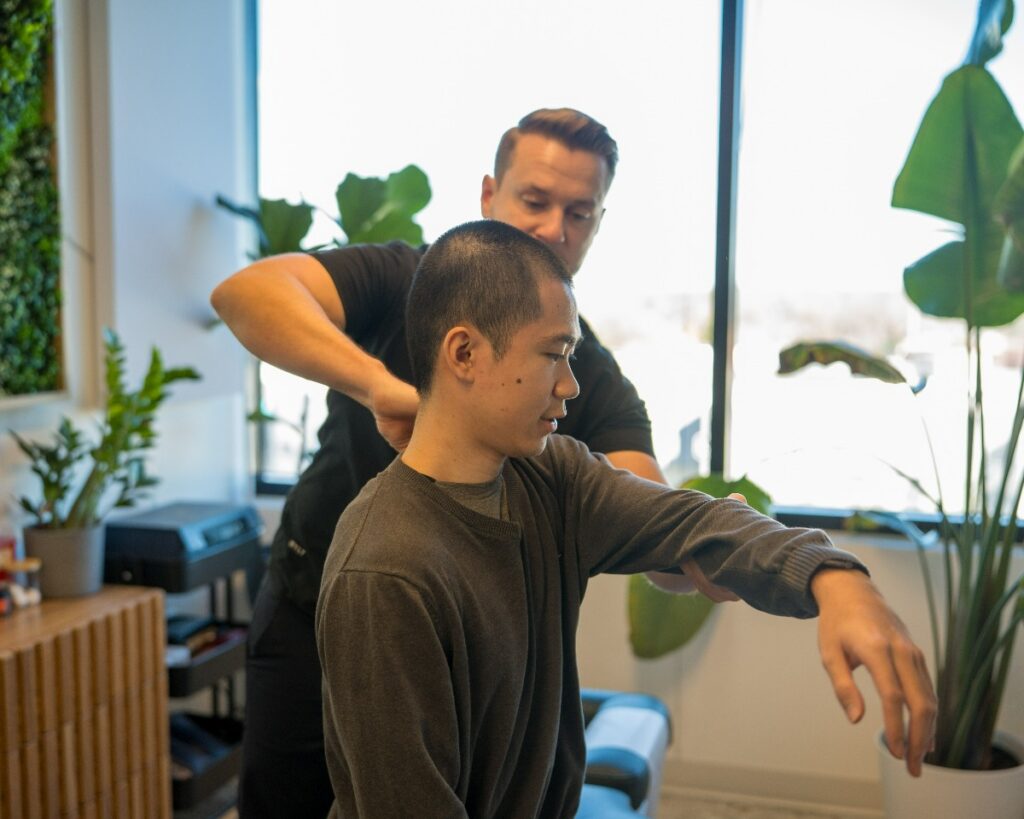
We assess motion, posture, strength, and how areas share load. If something doesn’t look right, we address it or refer appropriately.
Clear Plan. No Pressure.
We explain what we’re seeing in plain language and outline next steps. You stay in control.
Care That Fits Your Body
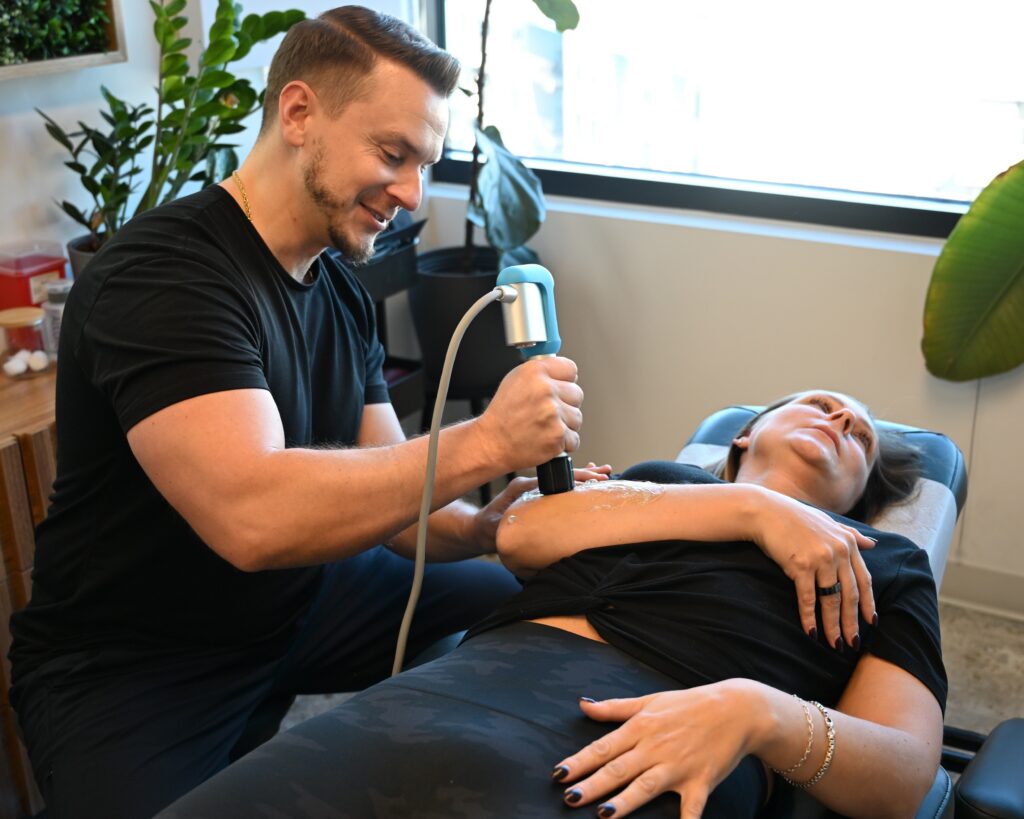
Treatment may include:
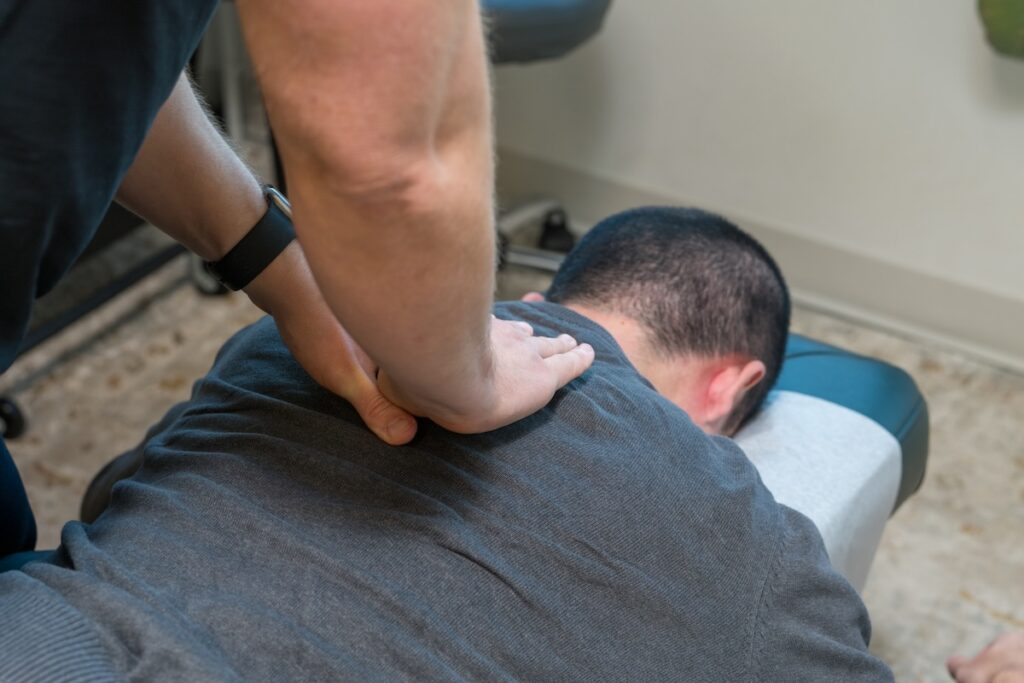
- Gentle adjustments
- Joint mobilization
- Soft tissue work
- Targeted exercises
- Ergonomic coaching
Everything is tailored to your comfort and goals.
Progress You Can Feel
Better mornings. Smoother sleep. More comfortable workdays. Fewer flare-ups.
We track what actually matters to you.
Practical Takeaways You Can Start Today
These won’t replace personalized care, but they often reduce daily strain:
- Move every 30–60 minutes—even 1–2 minutes counts.
- Raise your screens so your eyes land in the top third.
- Take 3 slow nasal breaths and let your shoulders drop on the exhale.
- Hip hinge when lifting (push hips back, let legs work).
- Alternate sitting and standing.
- Use both straps on a bag.
- Support your neck properly while sleeping.
- Spend 5 minutes morning and evening gently moving.
Small upgrades compound.
When to See a Chiropractor in Charlotte
Consider an evaluation if you’re dealing with:
- Stiffness lasting more than 1–2 weeks
- Repeat flare-ups
- Headaches linked to neck tension
- A lifting or sports tweak that hasn’t settled
- Pain that improves with movement but returns quickly
If chiropractic isn’t the right fit, we’ll guide you toward the right care.
Red Flags: When to Seek Urgent Medical Care
Seek immediate medical attention for:
- Severe pain after trauma
- Progressive weakness or numbness
- Bowel or bladder changes
- Fever with back pain
- History of cancer with new, unrelenting spine pain
Chiropractic care is not emergency care.
Myths and Facts About Everyday Aches
Myth: Something must be “out of place.”
Reality: Most everyday pain is sensitivity and stiffness, not dislocation.
Myth: The more you crack, the better.
Reality: Specific, guided care plus exercise works better than frequent self-manipulation.
Myth: Sitting is bad.
Reality: Long, unbroken sitting is the issue. Variety wins.
Myth: Perfect posture fixes everything.
Reality: Dynamic posture—positions you can move in and out of—matters more.
Life in Charlotte: Small Shifts, Big Difference
From Uptown desks to South End coffee lines to I-77 commutes, Charlotte life is active and ambitious.
You shouldn’t have to stop doing what you love.
The goal is simple:
Support your body while you do it.
A better chair setup.
A short walk between meetings.
Mobility before a workout.
Smarter lifting during yardwork.
Small shifts. Big difference.
Final Thoughts and Gentle Next Steps
Modern aches are common. They’re understandable. And in most cases, they’re changeable.
If you’re in Charlotte and want clarity, we’re here to help.
At Feel Good Chiropractic, we offer thoughtful, unrushed care for people who value understanding their body and investing in long-term function.
If you’re ready for a clear plan and a more comfortable day-to-day experience, you can:
→ Schedule a consultation here
or
→ Call our office to see if care is a good fit for you
No rush. No pressure. Just smart next steps.
FAQs
What is “tech neck,” and can it cause headaches?
“Tech neck” is the forward-head posture many of us fall into while looking at phones or laptops. When your head drifts forward, the muscles at the base of your neck and across your shoulders have to work overtime to hold it there. Over time, that extra effort can contribute to neck tension and, for some people, tension-type headaches. The good news? Small shifts like raising your screen, taking short movement breaks, and improving upper-back mobility often make a noticeable difference.
How often should I get up from my desk?
A simple, realistic goal is to change positions every 30–60 minutes. You don’t need a full workout. Even 1–2 minutes of standing, stretching, walking to refill water, or taking a call on your feet can reduce stiffness and reset your posture. Think variety, not perfection.
Are chiropractic adjustments safe?
For most people, chiropractic adjustments performed by a licensed chiropractor are considered safe and well-tolerated. At Feel Good Chiropractic, we screen carefully during your exam, review your health history, and modify techniques to match your comfort level. If something isn’t appropriate for you, we simply don’t do it. Care should feel thoughtful and individualized, not one-size-fits-all.
Should I use ice or heat for everyday aches?
Both can help; it depends on what your body responds to. Ice is often useful for a recently irritated or inflamed area. Heat can relax tight muscles and improve comfort. Use whichever feels better for you, typically for 10–15 minutes at a time, with a layer between your skin and the source. Your body’s response is usually the best guide.
Do I need an MRI before seeing a chiropractor?
In most everyday neck and back cases, no. Imaging is typically reserved for specific situations or when certain red flags are present. Many common spine-related concerns can be safely evaluated and managed without immediate imaging. If imaging would be helpful in your case, we’ll explain why and guide you through the next steps.
How many visits will I need?
It depends on your goals, how long the issue has been present, and how your body responds to care. Many people notice meaningful changes within a few visits, especially when they pair in-office care with simple at-home strategies. Others choose a more structured plan to address long-standing patterns. We’ll outline a clear recommendation, track your progress together, and adjust as you improve. No open-ended guessing.
TL;DR
- Modern routines—long sitting, screens, and stress—often create repeat strain that shows up as everyday aches.
- Symptoms are signals, not a life sentence. Small, steady changes usually help.
- Chiropractic care offers a conservative, non-drug, individualized approach focused on movement, comfort, and function.
- Start simple: move more often, raise screens, breathe deeper, and vary how you sit and stand.
- Seek urgent medical care for red flags (trauma, progressive weakness, bowel/bladder changes, fever with back pain). Otherwise, a calm evaluation can provide clarity and a plan.
References (for those who like to read more):