
When Arm Pain Starts Running the Show
Arm pain has a way of sneaking into everyday life. Reaching into a cabinet. Typing at work. Lifting a kid, a bag of groceries, or a barbell. What used to feel effortless suddenly feels sharp, achy, weak, or unpredictable.
At Feel Good Chiropractic, this is something we see every week. And the reassuring part?
Most arm pain cases are conservative, manageable, and very responsive to the right approach.
In this guide, we’ll break down:
- Why arm pain happens (and why it’s often not just an arm problem)
- Common causes we see here in Charlotte
- How chiropractic care may help
- What you can do right now to reduce strain
- When to seek care — and when to seek medical attention
Table of Contents
- What Arm Pain Is and Why It Happens
- Common Causes of Arm Pain
- Signs and Symptoms
- How Chiropractic Care Can Help Arm Pain
- What to Expect at Feel Good Chiropractic
- Practical Tips for Relief at Home
- When to See a Chiropractor in Charlotte
- When to Seek Medical Care
- Myths vs. Facts
- Final Thoughts for Charlotte Neighbors
What Arm Pain Is and Why It Happens
Arm pain isn’t a diagnosis.
It’s your body sending a signal.
That discomfort can come from:
- Muscles or tendons
- Joints in the shoulder, elbow, or wrist
- Nerves that start in the neck and travel into the arm
For example:
- A nerve irritated in the neck can create pain, tingling, or weakness all the way into the hand
- A stiff shoulder can pinch tissues with overhead reaching
- An overworked elbow tendon can flare up during typing or gripping
Your neck, upper back, shoulder blades, and arm all work as a connected system. When posture, repetitive stress, or a sudden strain throws that system off, symptoms often show up downstream — sometimes in the arm.
Understanding where the pain starts is key to fixing it safely.
Common Causes of Arm Pain We See in Charlotte
Between desk work, workouts, yard projects, sports, and carrying kids, certain patterns show up again and again.
| Common Cause | What It Often Feels Like |
| Cervical nerve irritation (“pinched nerve”) | Shootings pains, tingling, or numbness down the arm; possible weakness; neck stiffness |
| Rotator cuff or shoulder impingement | Achy pain on the outer shoulder/upper arm, worse with overhead activities; limited reach |
| Tennis elbow (lateral epicondylitis) | Outer elbow pain with lifting, gripping, or typing; tender to touch |
| Golfer’s elbow (medial epicondylitis) | Inner elbow pain with wrist flexion or gripping; repetitive strain |
| Thoracic outlet irritation | Heaviness or tingling in the arm, sometimes with overhead positions; fatigue |
| Wrist or hand overuse (e.g., carpal tunnel) | Numbness/tingling in thumb, index, middle fingers; night symptoms; gripping weakness |
| Postural strain/trigger points | Dull ache or referral from neck/shoulder blade into the arm; worse late in the day |
Most people don’t fit into just one box.
That’s why a thorough exam matters — arm pain is often multi-factorial.
Signs and Symptoms
Signs Your Body Is Giving You Clues
How your pain behaves helps narrow things down:
- Sharp, electric sensations → often nerve-related
- Deep ache with movement → muscle or tendon involvement
- Stiffness or night pain → commonly shoulder-driven
- Weak grip or lifting difficulty → nerve or tendon stress
Patterns matter too:
- Does pain start in your neck and travel down?
- Do your fingers tingle while typing?
- Does sleeping on one side make it worse?
These details guide smarter care — not guesswork.
How Chiropractic Care Can Help Arm Pain
Chiropractic care focuses on improving how joints, muscles, and nerves move and work together.
For many types of arm pain, a conservative plan that restores motion, reduces irritation, and strengthens key areas can help you move more comfortably — and stay that way.
At Feel Good Chiropractic, care is always individualized and may include:
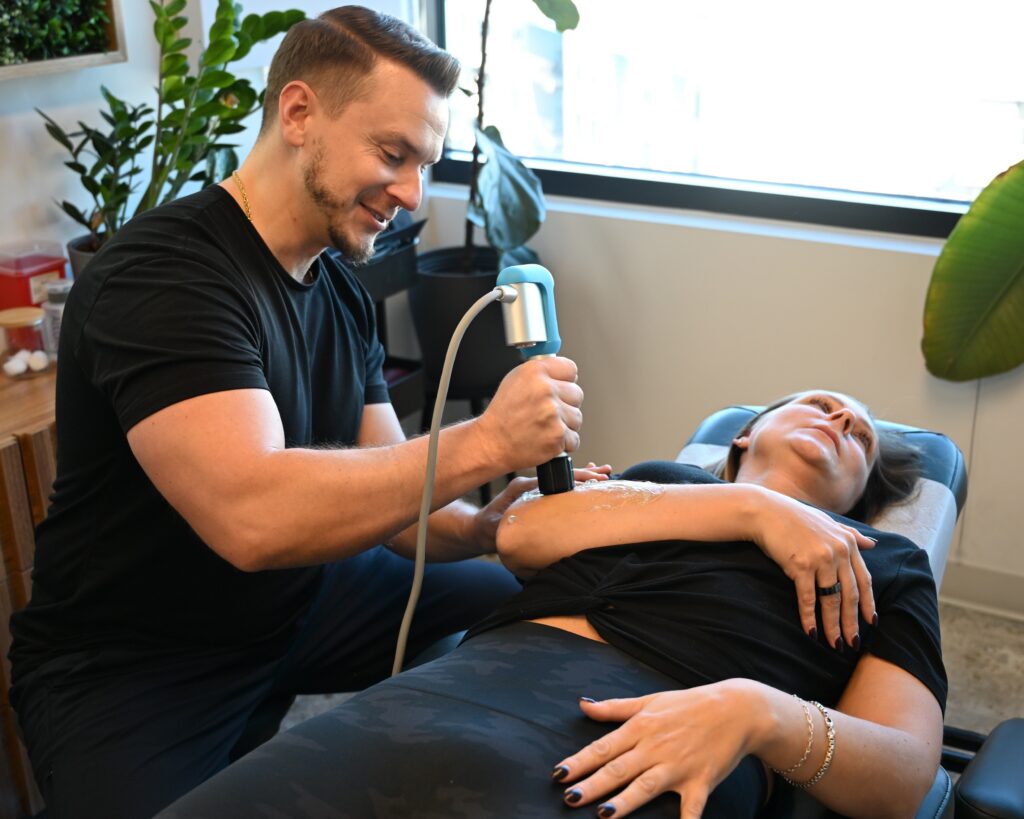
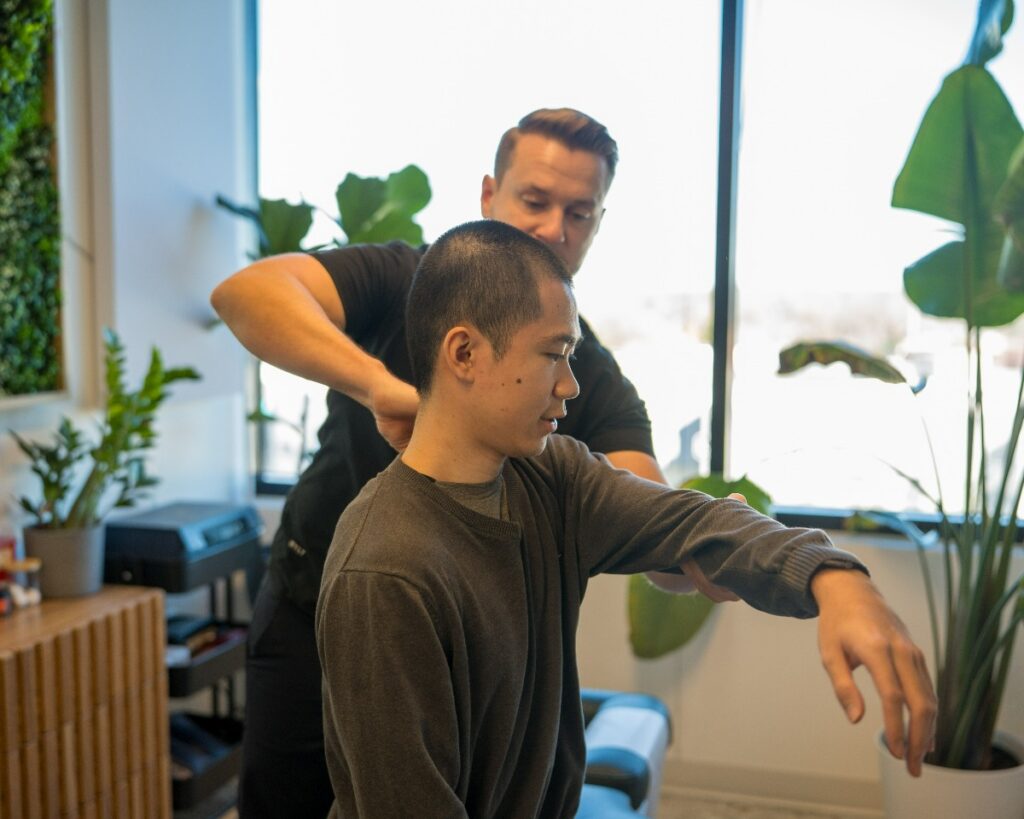
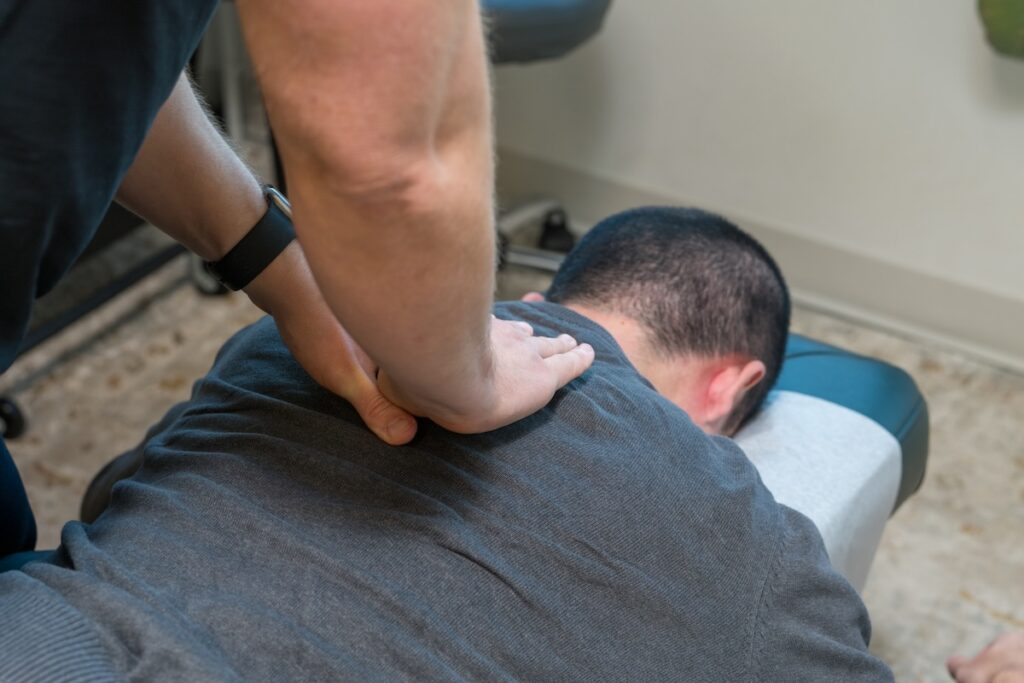
- Gentle spinal and extremity adjustments or mobilization
Improving motion in the neck, shoulder, elbow, or wrist often helps nerves and muscles calm down. - Soft-tissue work
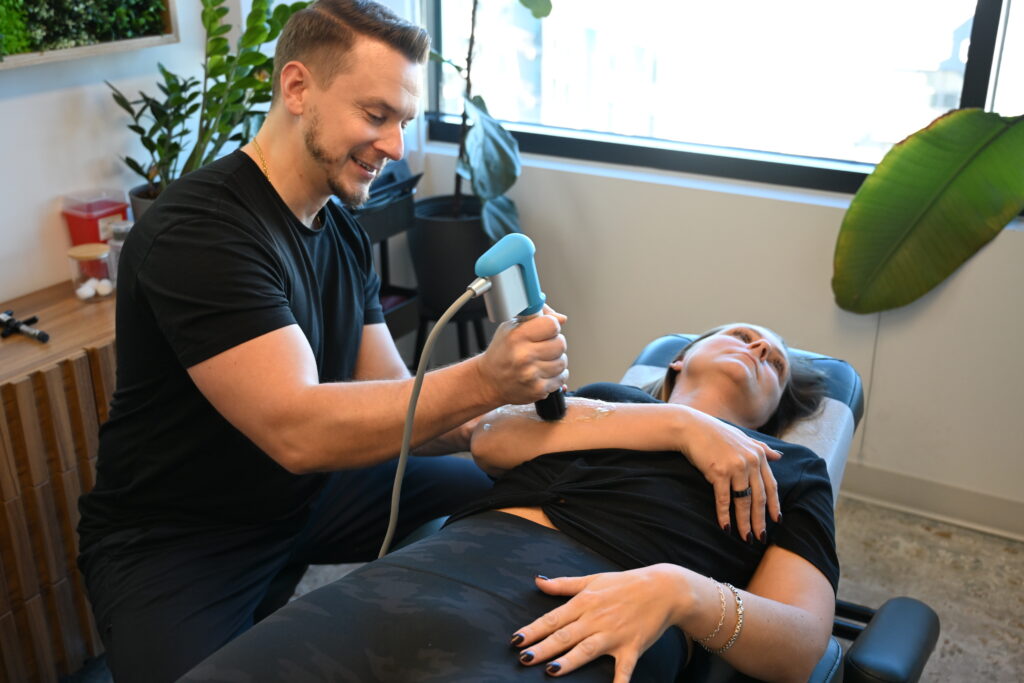
Techniques to reduce tight or overworked muscles that can refer pain into the arm. - Targeted exercises
Strengthening the rotator cuff, shoulder blade, and postural muscles to support long-term results. - Ergonomic and activity coaching
Small changes at your desk, in the gym, or during daily lifting can make a big difference. - Nerve mobility drills (when appropriate)
Used carefully to restore comfortable nerve movement. - Clear home strategies
Simple guidance for pacing, sleep setup, and daily habits between visits.
Chiropractic care is non-surgical and drug-free, making it a smart first step for many people. And if your exam suggests imaging, medical evaluation, or referral is needed, we’ll talk through that openly.
What to Expect at Feel Good Chiropractic
Your visit starts with listening.
We’ll talk through your symptoms, daily routines, past injuries, and goals. Then we examine:
- Joint motion
- Muscle balance
- Posture
- Nerve function
If chiropractic care is appropriate, we’ll outline a clear plan — typically combining hands-on care with simple exercises and practical adjustments to your daily routine.
You’ll know:
- What we’re working on
- What you can do at home
- How we’ll track progress
The goal is steady improvement — and skills you can use long after care ends.
Practical Tips for Relief at Home
While an in office exam is the best way to target you care, these general habits can help ease daily stress on your arm and shoulder system:
- Optimize your desk setup
Screen at eye level, elbows near 90°, wrists neutral. - Take movement breaks
Every 30–45 minutes, roll shoulders, open your chest, and gently turn your neck. - Support your sleep
Side sleepers: hug a pillow to prevent the shoulder from collapsing forward.
Back sleepers: a small pillow under the arm can help. - Warm up before lifting or workouts
Light shoulder blade and rotator cuff activation goes a long way. - Avoid leaning on elbows
Especially during long desk or phone sessions.
When to See a Chiropractor in Charlotte
Consider an evaluation if:
- Pain lasts more than 1–2 weeks
- Symptoms keep returning
- Pain limits work, workouts, or daily life
- Neck stiffness is paired with arm symptoms
- Grip or lifting feels weaker than it should
Early care often prevents compensation patterns that make issues linger.
Here in Charlotte, many of our patients juggle desk time with active weekends. That mix can be tough on the shoulder and elbow. If that sounds like you, an assessment can help you move comfortably and confidently again.
When to Seek Medical Care
Seek urgent medical attention if you experience:
- Chest pain with left arm pain, shortness of breath, or sweating
- Significant trauma with deformity or severe swelling
- Rapidly worsening weakness, numbness, or coordination loss
- Signs of infection (fever, redness, warmth, escalating swelling)
When in doubt, safety comes first — and we’re always happy to help guide next steps.
Myths vs. Facts
Myth: Arm pain always means a pinched nerve
Reality: Many cases are muscular or tendon-based.
Myth: Rest is the only solution
Reality: Strategic movement usually speeds recovery.
Myth: You should push through pain to get stronger
Reality: Pain is information — smart loading matters.
Myth: Chiropractic is only for backs
Reality: Chiropractors evaluate the entire musculoskeletal system.
Final Thoughts for Charlotte Neighbors
Arm pain can be frustrating — but it’s rarely something you’re “stuck with.”
With a thoughtful evaluation, hands-on care, and simple movement strategies, most people begin moving more comfortably and confidently again.
If you’re dealing with shoulder, elbow, wrist, or neck-related arm pain here in Charlotte, Feel Good Chiropractic is here to help you make sense of it — and map a clear, comfortable path forward.
FAQs
What causes arm pain that starts in the neck?
Irritation of a nerve in the neck (cervical radiculopathy) can send pain, tingling, or weakness into the arm. It often pairs with neck stiffness or pain. Other causes can feel similar, which is why an exam is important.
Can chiropractic help carpal tunnel or wrist pain?
Chiropractic care can address contributing factors like neck and shoulder tension, forearm muscle imbalance, and wrist joint mobility. For true carpal tunnel syndrome, we may also coordinate with your medical provider and discuss splinting or other options.
Is chiropractic safe for arm pain?
For most people, chiropractic care is considered a safe, conservative option when provided by a licensed clinician. Your history and exam help us decide what techniques are appropriate and whether you need a referral first.
How long does it take to feel better?
It varies. Some people notice improvement within a few visits, while others need a longer plan based on how long the pain has been present, the cause, and daily demands. We’ll set realistic goals and track progress together.
Should I use heat or ice?
Ice can be helpful for a new, hot flare, while gentle heat may ease stiffness in chronic cases. Use what feels best for short intervals and avoid placing either directly on the skin. If you’re unsure, we’ll guide you based on your exam.
Can I see a chiropractor after shoulder surgery?
Often yes, with your surgeon’s guidelines. Chiropractic care can focus on the neck, upper back, and safe areas around the shoulder while respecting surgical precautions. We coordinate care to keep you on track.
TL;DR
- Arm pain often comes from the neck, shoulder, elbow, or wrist — not just the arm itself
- Chiropractic care may help by restoring motion, easing tension, and guiding targeted exercises
- Seek care if pain lingers or limits daily life; seek medical attention for red-flag symptoms
- Simple habits like better desk setup, movement breaks, and sleep support matter more than you think