

What Does Cranial Facial Release Feel Like?
If you’re here, there’s a good chance you’ve been dealing with facial pressure, headaches behind the eyes, jaw tension, or that frustrating feeling that your nose just never fully clears. Maybe someone in Charlotte mentioned cranial facial release, or you saw a quick clip online and thought, That looks intense… what does it actually feel like?
This guide walks you through the experience in a calm, straightforward way, without the hype or scare tactics, so you can decide whether it’s something you want to explore.
Most people describe Cranial Facial Release (CFR) as brief, intense pressure deep inside the nose, followed by an immediate release. A small, soft balloon is gently placed into the nasal passage and inflated for about 1–2 seconds, then deflated.
During that moment:
- You will feel the balloon begin to expand and build pressure
- You may feel a “pop,” shift, or spreading pressure across the face or palate
- The balloon’s pressure will then release toward the back of the nose/soft palate
And then… it’s over.
Afterward, many people notice a sense of openness or lightness, with instantaneous improvements in nasal airflow.
Table of Contents
- What Cranial Facial Release Is (and Isn’t)
- What Cranial Facial Release Feels Like During a Session
- Why People Consider CFR
- How Conservative Chiropractic Care Fits In
- What Care Looks Like at Feel Good Chiropractic in Charlotte
- What to Expect Logistically if You Pursue CFR
- Practical, At-Home Support
- Safety, Risks, and Red Flags
- Myths and Facts About CFR
- When to See a Chiropractor in Charlotte
- Final Thoughts for Our Charlotte Community
What Cranial Facial Release Is (and Isn’t)
Cranial Facial Release is a non-surgical endonasal technique that uses a very small balloon inside the nasal passage to influence surrounding tissues and joint mechanics in the face and skull.
It is not the same thing as balloon sinuplasty, which is a surgical ENT procedure designed to widen sinus openings. CFR is performed in-office by providers trained in the technique, and not all chiropractors offer it.
What Cranial Facial Release Feels Like During a Session
Here’s a realistic snapshot of what patients report during a session:
| Sensation | What People Commonly Report | Typical Duration |
|---|---|---|
| Nasal Pressure | Strong but very brief | 1–2 seconds per inflation |
| Watery eyes | Reflex tearing or urge to sneeze | Seconds to minutes |
| Mild facial or dental tenderness | Dull ache under cheeks or upper teeth | Hours to a day |
| Sense of clarity or openness | Lightness or openness when breathing through nose | Immediate and long lasting |
| Mild headache or fatigue | Occasional post-session effect | Up to 24 hours |
Why People Consider CFR
Around Charlotte, we hear similar stories from people who ask about CFR:
- Struggling to breathe through one nostril or both
- Difficulty breathing at night that is disrupting sleep
- Complaints of snoring and sleep apnea
- Deviated septum or other nasal obstruction
- Ongoing facial pressure or headaches that haven’t responded to other care
- Jaw or bite tension that feels “locked in”
- Athletes struggling with nasal breathing
- Complimentary to dental work, orthodontics and myofunctional therapy
How Conservative Chiropractic Care Fits In
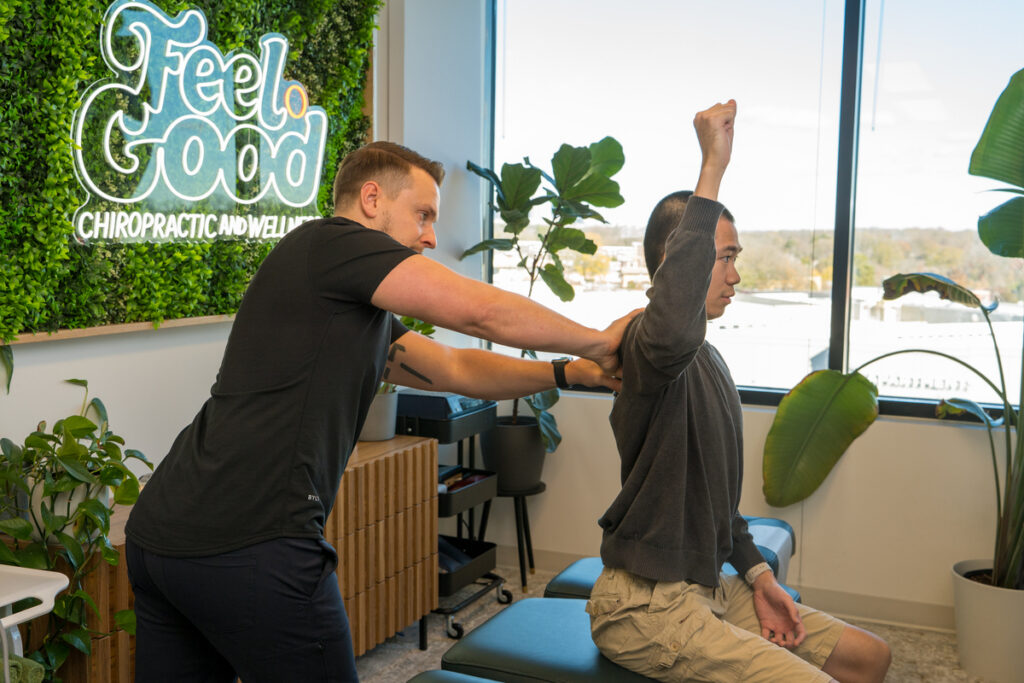
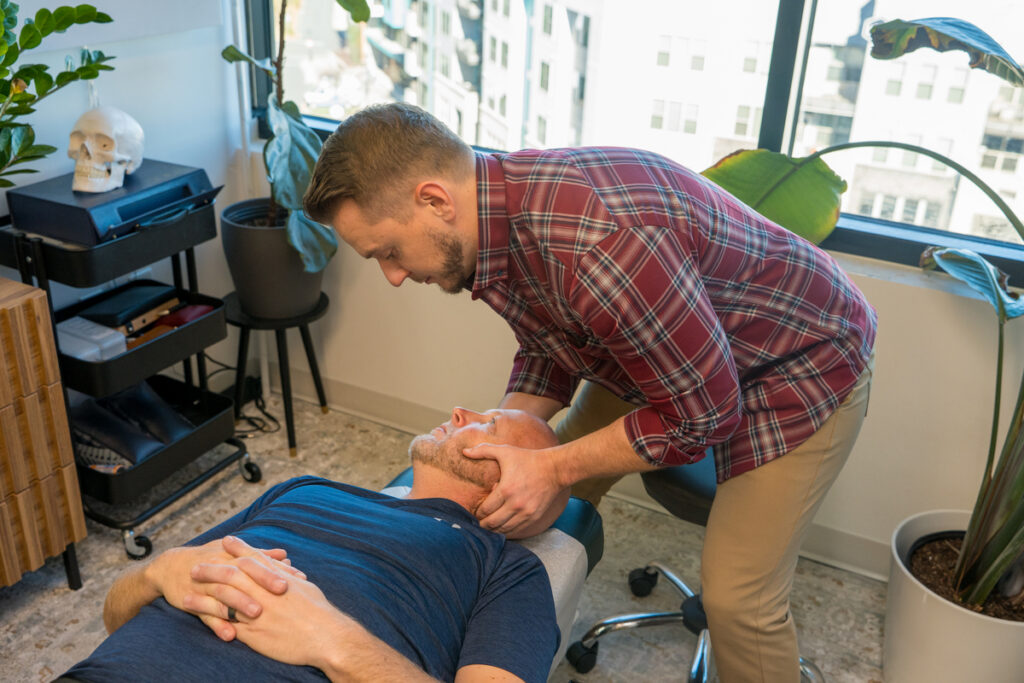
Chiropractic care is a conservative, non-surgical approach that often makes sense early in the process. At Feel Good Chiropractic, we look at how your neck, jaw, ribcage, posture, and breathing mechanics work together.
Depending on what we find, care may include:
- Gentle cervical and upper-back adjustments
- Jaw and facial soft-tissue work
- Breathing and posture coaching
- Simple home strategies to reduce strain
What Care Looks Like at Feel Good Chiropractic in Charlotte
Everything starts with listening.
We take time to understand your symptoms, routines, and goals. We assess posture, neck and jaw movement, and breathing mechanics.
You’ll always get:
- A clear plan in plain language
- An explanation of why we’re recommending something
- Space to ask questions and move at your own pace
Nothing is rushed. Consent and comfort guide every step.
What to Expect if You Pursue CFR
While protocols vary slightly by provider, most CFR sessions follow a similar flow:
-
Screening & consent
Your provider reviews nasal health, bleeding risk, recent infections, medications, and prior sinus or nasal surgeries. -
The procedure
A small, lubricated balloon is gently positioned in a specific area of the nasal passage and inflated briefly (usually 1–2 seconds). There may be a few passes per side, with rest between. -
Afterward
You’ll sit, breathe, and let things settle. Mild drainage, watery eyes, or a slight headache can happen. Most people resume normal activities the same day.
You’ll typically be advised to stay hydrated and avoid aggressive nose blowing for a short period.
Practical, At-Home Support
Whether you choose CFR or not, these habits often help reduce facial and head tension:
- Use isotonic saline mist or gentle rinses, especially during Charlotte’s allergy seasons
- Practice slow nasal breathing with long, relaxed exhales
- Take screen breaks and reset posture (ears over shoulders, jaw relaxed)
- Use gentle jaw mobility and tongue-to-palate awareness
- Sleep slightly elevated if congestion pools when lying flat
Small, consistent inputs add up.
Safety, Risks, and Red Flags
CFR is brief, but it isn’t for everyone.
Possible side effects include:
- Temporary discomfort or tenderness
- Watery eyes
- Mild headache
- Occasional minor nosebleed
People with recent nasal surgery, active infections, frequent nosebleeds, bleeding disorders, or certain blood-thinning medications may not be good candidates. In complex cases, an ENT evaluation is appropriate before considering CFR.
Seek medical care immediately for heavy or persistent nosebleeds, escalating facial pain, vision changes, fever, or neurological symptoms.
When to Seek Chiropractic Care in Charlotte
A chiropractic evaluation may help if:
- Headaches seem tied to neck or jaw tension
- Your posture feels “stuck”
- Facial pressure comes with neck stiffness or breathing issues
See a medical provider first if you have fever, severe one-sided facial pain, vision changes, or suspected infection.
We regularly collaborate with Charlotte-area ENTs, dentists, and primary care providers when a team approach makes sense.
Final Thoughts for Our Charlotte Community
Deciding whether to try Cranial Facial Release is personal. The most important piece is clarity and understanding your body, your options, and your comfort level.
Our role at Feel Good Chiropractic is to listen, evaluate carefully, and guide you toward the least invasive, most sensible next step for you.
If you’re in Charlotte and dealing with facial pressure, headaches, jaw tension, or posture-related discomfort, we’re here to help you make sense of it all without pressure, just honest guidance.
FAQ
Is Cranial Facial Release Safe?
Cranial Facial Release (CFR) can be safe for appropriately screened individuals when performed by a properly trained provider, but it is not risk-free. Common, short-term effects include nasal discomfort, watery eyes, congestion, or mild headache. Less commonly, a small nosebleed or nasal irritation can occur. A thorough health history, clear explanation of the procedure, and informed consent are essential before proceeding.
What does the procedure feel like in the moment?
Most people feel a strong but very brief pressure deep inside the nose, often accompanied by watery eyes or a reflex urge to sneeze. The balloon inflation typically lasts about 1–2 seconds and then releases. While the sensation can feel intense, it is short-lived, and many people are surprised by how quickly it’s over.
How many sessions do people usually need?
There is no universal number, but every new patient starts with a series of 5 visits. This is generally sufficient to take care of about 90% of cases, but occasionally more care may be recommended. Decisions about continuing care should be based on your goals, your response to the procedure, and ongoing discussion with your provider.
Is CFR the same as craniosacral therapy?
No. Craniosacral therapy is a gentle, external hands-on approach typically applied to the head, spine, and sacrum. CFR is an endonasal technique that uses a small balloon inside the nasal passage. They are fundamentally different approaches with different mechanisms and sensations.
Can children receive Cranial Facial Release?
Cranial facial release is tolerated well by all ages and may be an appropriate treatment for children. Pediatric CFR requires extra caution, specialized training, and careful case selection. It is not routinely appropriate for all children, but may be a helpful, non-surgical intervention for children suffering with snoring, nasal obstruction and mouth breathing.
Will chiropractic adjustments alone help facial pressure?
Sometimes. Facial pressure can be influenced by neck mechanics, jaw function, posture, muscle tension, and breathing patterns. In those cases, gentle chiropractic care, soft-tissue work, and breathing or posture strategies may help without any endonasal procedures. An individualized exam is the best way to determine whether chiropractic care alone is appropriate or if other options should be considered.
TL;DR
- Cranial facial release creates a brief, strong pressure in the nose from a tiny balloon; watery eyes and quick relief or temporary tenderness are common.
- It’s different from surgical sinus procedures and isn’t a guaranteed fix; results vary and evidence is mixed.
- Conservative chiropractic care can address neck, jaw, and breathing mechanics that often contribute to facial pressure or headaches.
- Not everyone is a candidate; certain nasal conditions and bleeding risks warrant caution or medical referral.
- In Charlotte, Feel Good Chiropractic offers clear evaluation, respectful guidance, and referrals when CFR or medical care is appropriate.