
If you’ve been dealing with headaches that just won’t quit, you might be surprised to learn that the culprit could be something you’re doing right now—slouching over your phone, hunching at your desk, or craning your neck forward while working. Here in Charlotte, NC, many patients walk into Feel Good Chiropractic And Wellness expecting their headaches to stem from stress or dehydration, only to discover that their posture has been silently contributing to their pain for months or even years. The connection between how you hold your body and the throbbing pain in your head is more direct than most people realize, and understanding this link could be the first step toward finding lasting relief.
Can poor posture cause headaches? Yes, poor posture can absolutely cause headaches, particularly tension-type headaches and cervicogenic headaches. When your head shifts forward from its natural alignment, it places significant strain on the muscles, joints, and nerves in your neck and upper back, which can trigger pain that radiates into your head, temples, and behind your eyes.
Table of Contents
- Understanding the Posture-Headache Connection
- Common Posture Problems That Trigger Headaches
- Signs Your Headaches Might Be Posture-Related
- The Biomechanics: What Happens to Your Neck and Head
- How Chiropractic Care Can Help Posture-Related Headaches
- Practical Tips to Improve Your Posture and Reduce Headaches
- When to See a Chiropractor for Your Headaches
- Headache Types and Posture Triggers
- Myths vs. Facts About Posture and Headaches
- Final Thoughts
Understanding the Posture-Headache Connection
Your head weighs approximately 10 to 12 pounds when it sits in proper alignment over your spine. However, for every inch your head shifts forward from this ideal position, the effective weight on your neck can increase dramatically—some biomechanics experts suggest by as much as 10 additional pounds per inch. This forward head posture, often called “text neck” or “tech neck,” has become increasingly common in our digital age.
When your head drifts forward, your neck muscles must work overtime to support this extra load. The suboccipital muscles at the base of your skull, the upper trapezius muscles across your shoulders, and the levator scapulae muscles along the sides of your neck all become chronically tight and fatigued. This constant tension creates trigger points—localized areas of muscle tightness that can refer pain to other areas, including your head.
The connection doesn’t stop at muscles. Poor posture also affects the alignment of your cervical spine—the seven vertebrae in your neck. When these vertebrae shift out of their natural curve, they can irritate the nerves that exit your spinal cord and travel to your head and face. The upper cervical nerves, particularly from the C1, C2, and C3 levels, share pathways with the trigeminal nerve, which is responsible for sensation in much of your face and head. This neurological crossover explains why neck dysfunction can manifest as head pain.
Research published in journals focusing on headache disorders and spine health has consistently shown associations between cervical spine dysfunction and certain types of headaches. The evidence suggests that addressing mechanical problems in the neck may reduce headache frequency and intensity for many sufferers. Here at Feel Good Chiropractic And Wellness in Charlotte, we see this connection play out daily with our patients.
Common Posture Problems That Trigger Headaches
Not all posture problems are created equal when it comes to headaches. Some specific patterns are particularly notorious for causing head pain.
Forward Head Posture
This is the most common postural fault we encounter. Your ears should align roughly over your shoulders when viewed from the side. When your head shifts forward—often while looking at screens, reading, or driving—the posterior neck muscles strain to prevent your head from falling completely forward. Over time, this creates a cascade of muscle imbalances and joint restrictions that frequently result in headaches.
Rounded Shoulders and Upper Crossed Syndrome
When your shoulders round forward, your chest muscles tighten and your upper back muscles weaken and stretch. This pattern, known as upper crossed syndrome, almost always accompanies forward head posture. The combination creates significant stress on the cervicothoracic junction—the area where your neck meets your upper back—which is a common source of referred headache pain.
Prolonged Static Positions
Even if your workstation is ergonomically perfect, staying in any single position for hours without movement can trigger headaches. Static positioning reduces blood flow to muscles, decreases nutrient delivery, and allows metabolic waste products to accumulate. This is why office workers, drivers, and students are particularly vulnerable to posture-related headaches.
Sleeping Posture
Your posture doesn’t matter only when you’re awake. Sleeping with too many pillows, sleeping on your stomach with your neck rotated, or using old, unsupportive pillows can maintain or worsen neck dysfunction that contributes to morning headaches.
Signs Your Headaches Might Be Posture-Related
Not every headache stems from posture problems, but certain characteristics suggest a postural component. Recognizing these patterns can help you understand whether your posture might be contributing to your pain.
Posture-related headaches, often classified as cervicogenic headaches or tension-type headaches, typically start at the base of your skull or in your neck and spread forward. You might feel pain that begins in your neck or upper shoulders and gradually moves up into your head, settling behind your eyes, at your temples, or across your forehead like a tight band.
These headaches often worsen as the day progresses, particularly if you spend hours at a computer or looking down at your phone. You might notice that certain neck movements or positions trigger or intensify the pain. Tilting your head backward, turning your head to check your blind spot while driving, or holding your head in one position for an extended period might reproduce or worsen your symptoms.
Many people with posture-related headaches also experience neck stiffness or reduced range of motion. You might have difficulty looking over your shoulder, notice tightness when trying to tilt your head toward your shoulder, or feel like your neck is “stuck” in the mornings.
The pain quality is also telling. Posture-related headaches tend to feel like a dull ache, pressure, or tightness rather than the throbbing associated with migraines. However, it’s worth noting that poor posture can also trigger migraines in susceptible individuals, so the presence of throbbing pain doesn’t rule out a postural component.
Additional clues include tenderness when pressing on the muscles at the base of your skull, tightness in your shoulders and upper back, and temporary relief when you massage your neck or apply heat to tight muscles.
The Biomechanics: What Happens to Your Neck and Head
Understanding what actually happens inside your neck when your posture suffers can help you appreciate why this issue deserves attention. Your cervical spine is a remarkable structure designed to support your head’s weight while allowing extensive movement in multiple directions. This mobility comes at a cost—your neck is inherently less stable than other spinal regions and more vulnerable to the effects of poor posture.
When your head shifts forward, several mechanical changes occur simultaneously. First, the normal lordotic curve in your neck—the gentle backward C-shape—begins to flatten or even reverse. This altered curvature changes how forces distribute through your cervical vertebrae and intervertebral discs. Instead of compression forces being evenly distributed, certain segments experience increased stress, particularly at the cervicothoracic junction.
Second, the facet joints—the small joints that connect adjacent vertebrae—experience abnormal loading patterns. These joints contain nerve endings and can become sources of pain when stressed improperly. In forward head posture, the lower cervical facet joints often become compressed while the upper cervical joints may hypermobilize or move excessively to compensate.
Third, the soft tissues adapt to these sustained positions. Muscles on the back of your neck shorten and develop trigger points, while muscles in the front of your neck and upper chest often become weak and overstretched. This creates a muscular imbalance that perpetuates the poor posture even when you try to sit up straight.
The nervous system becomes involved when irritated joints, tight muscles, or altered biomechanics affect the nerves exiting your cervical spine. The greater occipital nerve, which emerges from between the C2 and C3 vertebrae and travels up the back of your head, is particularly vulnerable. Compression or irritation of this nerve can cause pain that radiates from the base of your skull to your forehead and behind your eyes.
Blood flow can also be affected. Chronically tight muscles may compress blood vessels, reducing circulation to the head and neck. While this is rarely the primary cause of headaches, it can contribute to the overall problem and explain why some people experience lightheadedness along with their headaches.
How Chiropractic Care Can Help Posture-Related Headaches
Chiropractic care offers a conservative, non-invasive approach to addressing the underlying mechanical problems that contribute to posture-related headaches. At Feel Good Chiropractic And Wellness, we focus on identifying and correcting the specific dysfunctions in your spine and surrounding structures that may be triggering your head pain.
Evidence from systematic reviews and clinical guidelines suggests that spinal manipulation and mobilization can be effective for certain types of headaches, particularly cervicogenic headaches and tension-type headaches. The American College of Physicians, in their clinical practice guidelines for non-invasive treatments, has acknowledged spinal manipulation as an option for headache management.
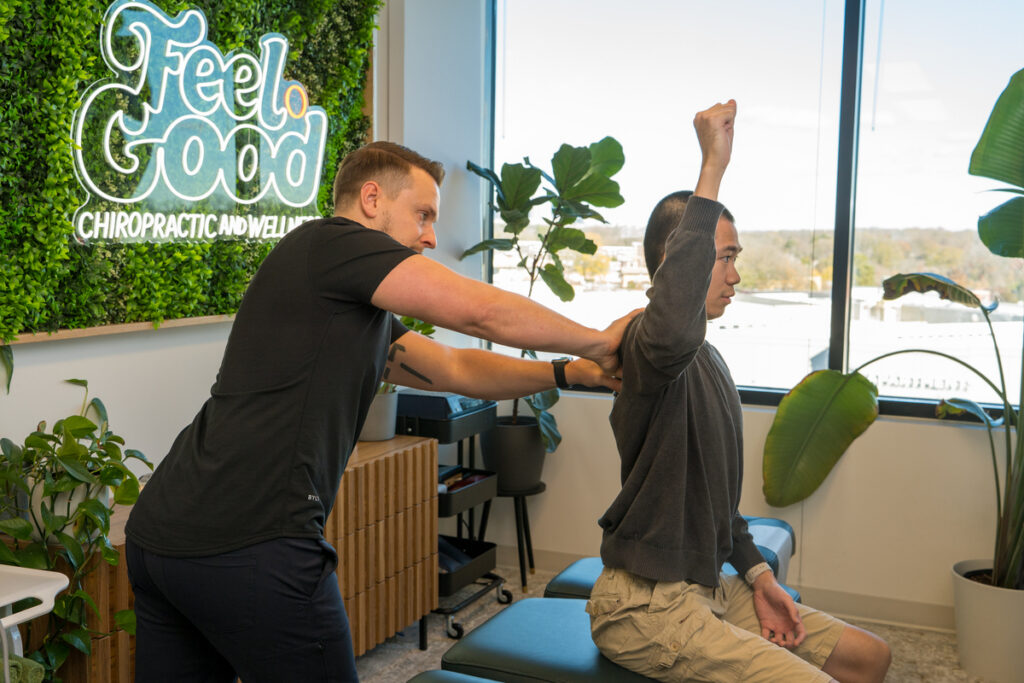
When you visit our Charlotte office with headaches, we begin with a thorough evaluation that includes your health history, a postural assessment, orthopedic and neurological testing, and palpation of your spine and muscles. We look at how you hold your head, where your shoulders sit, and whether your spine maintains its natural curves. We also assess your cervical range of motion and identify areas of restriction or dysfunction.
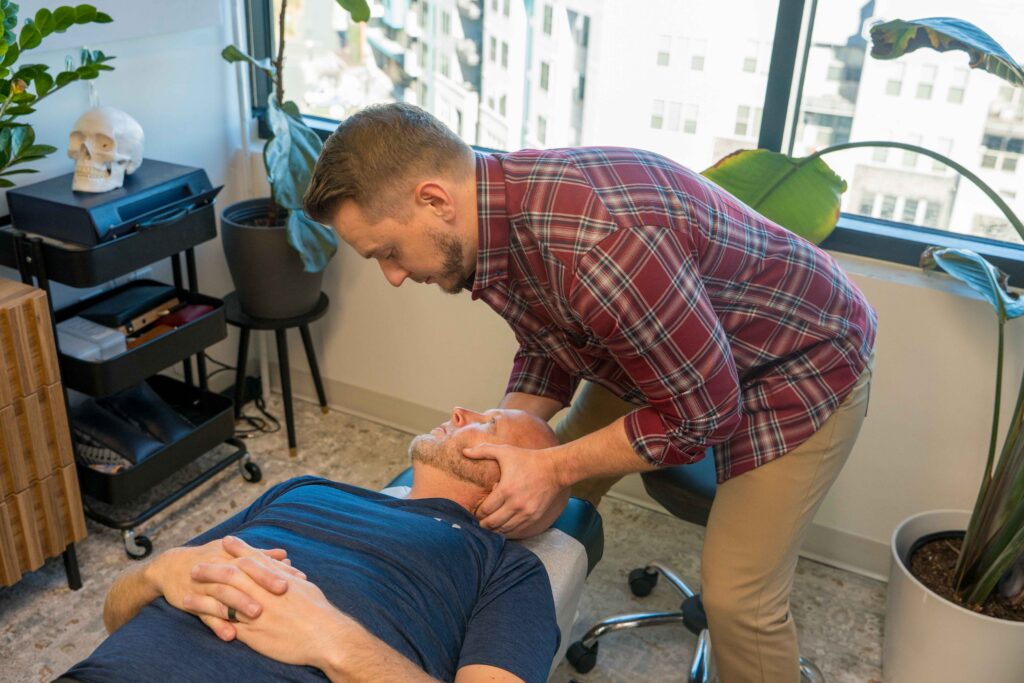
Chiropractic adjustments aim to restore proper movement and alignment to restricted spinal segments. When vertebrae move more freely and align more properly, it can reduce nerve irritation, decrease muscle tension, and improve overall biomechanics. For headache patients, we often focus on the upper cervical spine and the cervicothoracic junction, though the specific approach depends on your individual presentation.
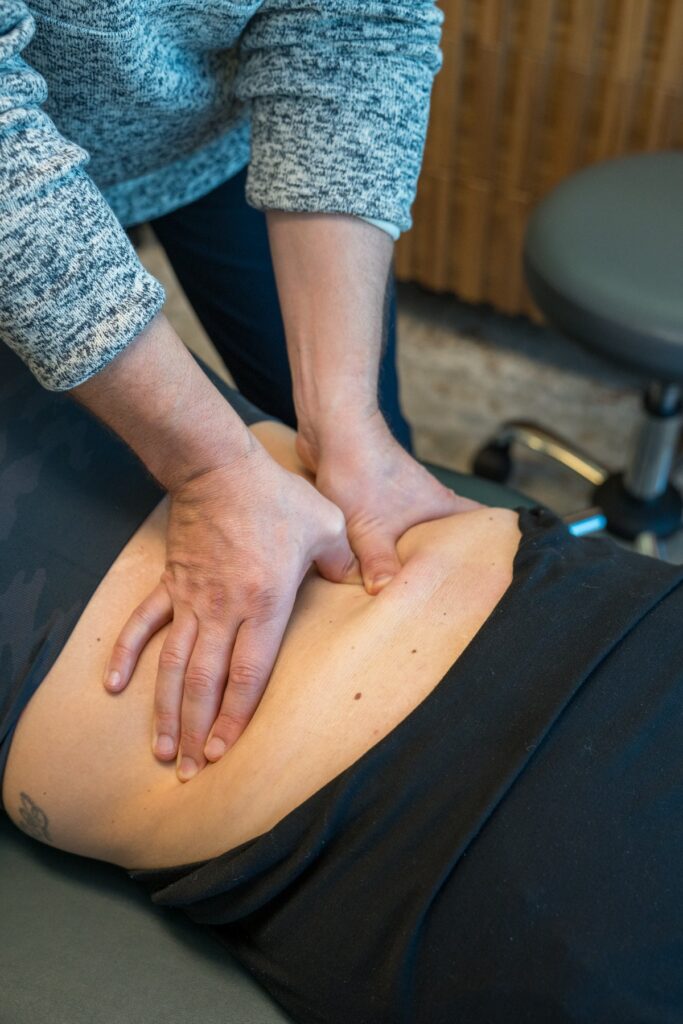
Beyond adjustments, comprehensive care typically includes soft tissue therapy to address tight, trigger-pointed muscles. Techniques like myofascial release, trigger point therapy, and muscle stripping can help relax chronically contracted muscles and improve blood flow. We may also provide specific exercises designed to strengthen weak muscles, improve postural awareness, and restore proper movement patterns.
Many patients notice some improvement within the first few visits, though the timeline varies depending on how long the problem has existed and how severe the postural deviations have become. Chronic postural problems that have developed over years typically require more time and active participation to correct than recent onset issues.
Practical Tips to Improve Your Posture and Reduce Headaches
While professional care is important for addressing established dysfunction, there’s much you can do on your own to improve your posture and reduce headache frequency. Here are practical, evidence-based strategies you can implement starting today.
Optimize Your Workstation Ergonomics
If you work at a computer, proper ergonomics are essential. Position your monitor so the top of the screen sits at or slightly below eye level, about an arm’s length away. This prevents you from tilting your head up or down or leaning forward. Your chair should support your lower back and allow your feet to rest flat on the floor with your knees at roughly a 90-degree angle. Your keyboard and mouse should be positioned so your elbows rest comfortably at your sides at about a 90-degree angle.
Practice the 20-20-20 Rule
Every 20 minutes, take 20 seconds to look at something 20 feet away. This simple practice gives your neck muscles a brief break from static positioning and helps prevent the gradual forward creep of your head throughout the day. Set a timer if you tend to get absorbed in your work.
Strengthen Your Neck and Upper Back
Weak muscles can’t maintain good posture. Simple exercises like chin tucks, where you gently draw your chin straight back without tilting your head, can strengthen the deep neck flexors that help maintain proper head position. Rows and scapular squeezes strengthen the muscles between your shoulder blades that pull your shoulders back. Consistency matters more than intensity with these exercises.
Be Mindful of Your Phone Usage
The average American spends over three hours per day on their smartphone, often with their head bent forward at significant angles. Instead of looking down at your phone, bring it up to eye level. This simple change dramatically reduces the strain on your neck. Consider this especially important for teenagers and young adults who are developing postural habits that may follow them for life.
Adjust Your Sleep Setup
Your pillow should maintain your neck in a neutral position—not too high or too low. Side sleepers typically need a thicker pillow than back sleepers. Avoid sleeping on your stomach if possible, as this position requires you to rotate your neck to one side for hours. If your pillow is more than a couple of years old or has lost its shape, consider replacing it.
Take Movement Breaks
No position is perfect if maintained too long. Stand up, walk around, roll your shoulders, and perform gentle neck movements several times throughout your day. Even two or three minutes of movement every hour can make a significant difference in reducing muscle tension and preventing headaches.
Practice Postural Awareness
Periodically check in with your body throughout the day. Are your shoulders creeping up toward your ears? Is your head drifting forward? Are you holding tension in your jaw or neck? Simply becoming aware of these patterns is the first step toward changing them. Some people find it helpful to set hourly reminders to perform a quick posture check.
When to See a Chiropractor for Your Headaches
While occasional headaches are common and often resolve on their own, certain patterns warrant professional evaluation. If your headaches occur more than twice per week, last for several hours or days, or significantly interfere with your daily activities, it’s time to seek care.
Headaches that progressively worsen over time or don’t respond to over-the-counter pain relievers deserve attention. If you find yourself taking pain medication more frequently or increasing the dose to get relief, you need a different approach that addresses the underlying cause rather than just masking symptoms.
If your headaches clearly correlate with specific activities—computer work, driving, or certain neck positions—this suggests a mechanical component that conservative care like chiropractic can address. Similarly, if you notice neck stiffness, shoulder pain, or reduced neck mobility accompanying your headaches, these are indicators that spinal dysfunction may be contributing.
Morning headaches that improve as the day progresses might indicate sleep posture issues or nighttime jaw clenching, both of which can be evaluated and addressed. Conversely, headaches that worsen throughout the workday often point to cumulative postural stress.
It’s important to distinguish between headaches that are appropriate for chiropractic care and those requiring immediate medical attention. Seek emergency care for sudden, severe headaches unlike any you’ve experienced before, headaches accompanied by fever, confusion, vision changes, difficulty speaking, numbness or weakness, or headaches following a head injury. These red flags require prompt medical evaluation to rule out serious conditions.
For most posture-related headaches, however, conservative chiropractic care represents a safe, effective starting point. At Feel Good Chiropractic And Wellness in Charlotte, we’ll perform a thorough evaluation to determine whether your headaches are appropriate for chiropractic care or whether medical co-management or referral would be more appropriate.
Headache Types and Posture Triggers
| Headache Type | Typical Location | Common Posture Triggers | Distinguishing Features |
|---|---|---|---|
| Cervicogenic Headache | Base of skull, radiating forward to forehead/eyes | Forward head posture, prolonged sitting, sleeping on stomach | Usually one-sided, triggered by neck movements, reduced neck mobility |
| Tension-Type Headache | Band-like pressure around head, temples, back of head | Static positioning, hunched shoulders, jaw clenching | Bilateral pressure or tightness, muscle tenderness in neck/shoulders |
| Postural Migraine | Variable, often one-sided, temples or behind eyes | Poor posture can trigger in susceptible individuals | Throbbing quality, may include light/sound sensitivity, nausea |
| Suboccipital Headache | Base of skull, may radiate to top of head | Forward head posture, looking up or down for prolonged periods | Tenderness at base of skull, worsens with sustained positions |
Myths vs. Facts About Posture and Headaches
Myth: Only people with terrible posture get posture-related headaches
Fact: Even mild postural deviations maintained over long periods can trigger headaches. You don’t need to have severely rounded shoulders or an extremely forward head position to experience posture-related pain. Subtle imbalances repeated day after day can create enough cumulative stress to cause symptoms.
Myth: If sitting up straight doesn’t immediately help, posture isn’t the problem
Fact: Postural problems that develop over months or years don’t resolve instantly when you sit up straight for a few minutes. The muscles, joints, and soft tissues have adapted to the poor positioning, and it takes consistent effort over time to retrain them. If poor posture contributes to your headaches, you’ll likely need weeks of sustained postural improvements to notice significant changes.
Myth: Posture-related headaches only affect older adults
Fact: We’re seeing posture-related headaches in increasingly younger populations, including teenagers and young adults. The rise of smartphones and increased screen time starting at early ages has made “tech neck” and associated headaches common even in adolescents. Your age doesn’t protect you from the consequences of poor posture.
Myth: Strong neck muscles prevent posture-related headaches
Fact: Strength is important, but muscle balance and endurance matter more. You can have strong neck muscles and still develop posture-related headaches if those muscles are tight, imbalanced, or chronically fatigued from maintaining poor positions. Proper posture involves coordination and endurance more than pure strength.
Myth: Chiropractic care for headaches is just cracking your neck
Fact: Comprehensive chiropractic care for posture-related headaches involves much more than adjustments. At Feel Good Chiropractic And Wellness, we address muscle tension, provide postural education, recommend ergonomic modifications, prescribe therapeutic exercises, and create individualized care plans. Adjustments are one tool among many in our approach to helping headache sufferers.
Final Thoughts
The link between poor posture and headaches is neither surprising nor inevitable once you understand the mechanics involved. Your head, neck, and upper back work as an integrated system, and when one component falls out of balance, the entire system suffers. The good news is that posture-related headaches respond well to conservative care that addresses the underlying mechanical problems.
If you’re living with frequent headaches here in Charlotte, take an honest look at your daily posture habits. How much time do you spend looking down at screens? What does your workstation setup look like? How do you sleep? Small changes in these areas, combined with professional chiropractic care when needed, can make a significant difference in your headache frequency and intensity.
At Feel Good Chiropractic And Wellness in Charlotte, NC, we’re committed to helping our community members understand the connections between their daily habits and their health. Headaches don’t have to be a normal part of life, and medication isn’t your only option. We invite you to explore how addressing your posture and spinal health might change your headache story.
Remember, you didn’t develop poor posture overnight, and you won’t correct it overnight either. Be patient with yourself, stay consistent with the changes you implement, and don’t hesitate to seek professional guidance. Your neck and head will thank you.
Frequently Asked Questions
How long does it take to correct posture-related headaches?
The timeline varies based on how long you’ve had poor posture and how severe your dysfunction has become. Some patients notice improvements within a few weeks of consistent care and postural modifications, while others with chronic, long-standing problems may need several months. Most people see meaningful progress within 4-8 weeks when combining professional care with home exercises and ergonomic changes.
Can poor posture cause migraines or only tension headaches?
While poor posture more commonly triggers cervicogenic and tension-type headaches, it can also serve as a migraine trigger for people who are already susceptible to migraines. The neck dysfunction and muscle tension created by poor posture can activate the pain pathways that lead to migraine episodes in vulnerable individuals.
Will I need chiropractic care forever for posture-related headaches?
The goal of chiropractic care is to restore function and give you the tools to maintain better posture independently. Many patients achieve significant improvement and then transition to occasional maintenance visits or manage their symptoms with home care strategies. How much ongoing care you need depends on your specific situation, lifestyle demands, and ability to maintain postural improvements.
Are exercises alone enough to fix posture-related headaches?
For some people with mild dysfunction, exercises and ergonomic changes may be sufficient. However, many people need professional care to address existing joint restrictions and muscle dysfunction before exercises become fully effective. The most successful approach typically combines professional treatment with active self-care strategies.
Can children develop posture-related headaches?
Yes, children and adolescents can absolutely develop posture-related headaches, particularly with increased device usage and heavy backpacks. If your child experiences frequent headaches, has them complain of neck pain, or notice them consistently slouching, it’s worth having their posture and spinal health evaluated.
What’s the difference between cervicogenic headaches and regular tension headaches?
Cervicogenic headaches originate from dysfunction in the cervical spine and neck structures, while tension-type headaches involve muscle tension that may or may not have a clear spinal component. Cervicogenic headaches typically start in the neck and radiate forward, often affect one side more than the other, and can be triggered or reproduced by specific neck movements or positions. Both can be related to poor posture, but cervicogenic headaches have a clearer mechanical, structural origin.
TL;DR – Key Takeaways
- Poor posture can absolutely cause headaches by creating muscle tension, joint dysfunction, and nerve irritation in your neck and upper back that refers pain to your head
- Forward head posture increases the effective weight your neck must support, potentially adding 10 pounds of stress for every inch your head shifts forward
- Common signs of posture-related headaches include pain that starts in the neck and radiates forward, worsens throughout the day with sustained positions, and accompanies neck stiffness or reduced mobility
- Chiropractic care addresses the underlying mechanical problems through adjustments, soft tissue therapy, exercises, and postural education rather than just masking symptoms with medication
- Simple changes like optimizing your workstation ergonomics, taking regular movement breaks, bringing your phone to eye level, and strengthening your neck and upper back muscles can significantly reduce headache frequency