
Spinal Health and Posture: Simple Ways to Help Prevent Back Pain in Charlotte
If you have ever finished a long day at your desk in Uptown, climbed out of the car after sitting in I-77 traffic, or spent part of your weekend doing yardwork only to feel that familiar ache in your back later, you are not alone.
Here in Charlotte, a lot of people spend their days sitting, driving, training, lifting, and trying to keep up with a busy schedule. When your posture, movement habits, and spinal health are not getting enough attention, your back is often the first place you feel it.
The good news is that preventing back pain is usually not about doing anything extreme. In most cases, it comes down to a few simple, consistent habits: moving more often, setting up your workspace better, improving how you lift, and giving your spine the support it needs.
At Feel Good Chiropractic, this is exactly the kind of thing we help people with every day. In this guide, I will walk you through practical, realistic ways to support your posture, improve spinal health, and reduce the chances of back pain becoming a regular part of your life.
Why Spinal Health and Posture Matter
Your spine is designed to move. It bends, rotates, absorbs force, and helps support everything you do throughout the day. It also protects your nervous system, which is one of the reasons spinal health matters so much when it comes to comfort, movement, and overall function.
Good posture does not mean forcing yourself to sit ramrod straight all day. It means putting your body in a more balanced, supported position most of the time so one area is not taking unnecessary stress for hours on end.
That is where many people run into trouble.
Long periods of sitting, slouching at a desk, repetitive bending, poor lifting mechanics, long commutes, and stiff workout habits can all start to add up. Over time, muscles tighten, joints become irritated, movement gets less efficient, and the back begins to feel the effects.
Taking care of your spinal health is one of the simplest ways to help prevent back pain before it turns into something more frustrating. It is not about perfection. It is about better habits, better awareness, and small changes done consistently.
How Posture Affects Your Spine, Muscles, and Nerves
Your spine works best when its natural curves are supported and the surrounding muscles are sharing the workload well.
When posture is balanced, your head, ribs, pelvis, and hips work together more efficiently. Your joints move better. Your muscles do not have to overcompensate as much. Your body tends to feel less tense and more capable.
When posture slips into the same stressed position over and over, the opposite tends to happen.
For example, sitting in a rounded position for hours can leave the upper back stiff, the hips tight, and the low back overworked. A forward head posture can increase strain through the neck and upper back. Standing with all your weight on one hip can create asymmetry and irritation over time.
This does not mean there is one perfect posture you must hold all day. In fact, that kind of thinking usually creates more tension. What matters more is spending more time in better positions and changing positions often.
That is the real key: support your body well, then keep it moving.
Common Posture Mistakes and Better Options
Most people do not need perfect posture. They just need a few better options they can return to throughout the day.
Here are some of the most common posture habits I see, along with simple adjustments that often help:
| Common Habit | Try This Instead |
|---|---|
| Slumping at a laptop with the screen too low | Raise the screen to eye level; use a separate keyboard and mouse |
| Perching on the edge of a chair | Sit back, hips higher than knees, feet flat, back supported |
| Standing with weight always on one hip | Switch sides often or stand with feet hip-width and soft knees |
| Holding the phone at your lap | Bring the phone up toward eye level to reduce neck strain |
| “Chest up, shoulders back” all day (rigid bracing) | Think “tall and easy,” gentle length through the spine, breathe |
| Lifting with a rounded, twisting back | Hinge at hips, keep load close, pivot with your feet |
The Biomechanics of Posture, Simply Explained
When posture is more balanced, your body can distribute force better.
That means your spine’s natural curves can do their job, your discs can handle pressure more comfortably, your joints can move more freely, and your muscles can work together instead of fighting each other.
A simple way to think about it is this: your head should generally stack over your ribs, your ribs over your pelvis, and your hips should be able to contribute to movement without your low back doing all the work.
When that stacking is off for too long, load shifts in less helpful ways.
A forward head posture tends to overload the neck and upper back. A collapsed seated posture can reduce support from the hips and core. Repetitive bending without good mechanics can make the low back do more than it should.
That is why the fix is usually not “sit up straighter.” It is more often a combination of:
- better positioning
- more movement variety
- better strength and control
- less time stuck in one posture
That is also why so many people feel better when they focus on both posture and movement, not posture alone.
How Chiropractic Care Fits Into Back Pain Prevention
Chiropractic care is a conservative, non-surgical approach that focuses on improving movement, function, and comfort.
For many people, that means helping stiff joints move better, reducing muscle tension, and making it easier to sit, stand, bend, and move through the day without constantly fighting discomfort. When your body moves better, posture usually becomes easier to maintain naturally.
Chiropractic care can also help identify the bigger picture behind recurring back pain.
Sometimes the issue is not just the painful area itself. It may be related to poor desk setup, stiff hips, a weak or underused mid-back, repetitive work stress, lifting mechanics, or movement habits that keep overloading the same area.
At Feel Good Chiropractic, we look at those patterns, not just the spot that hurts.
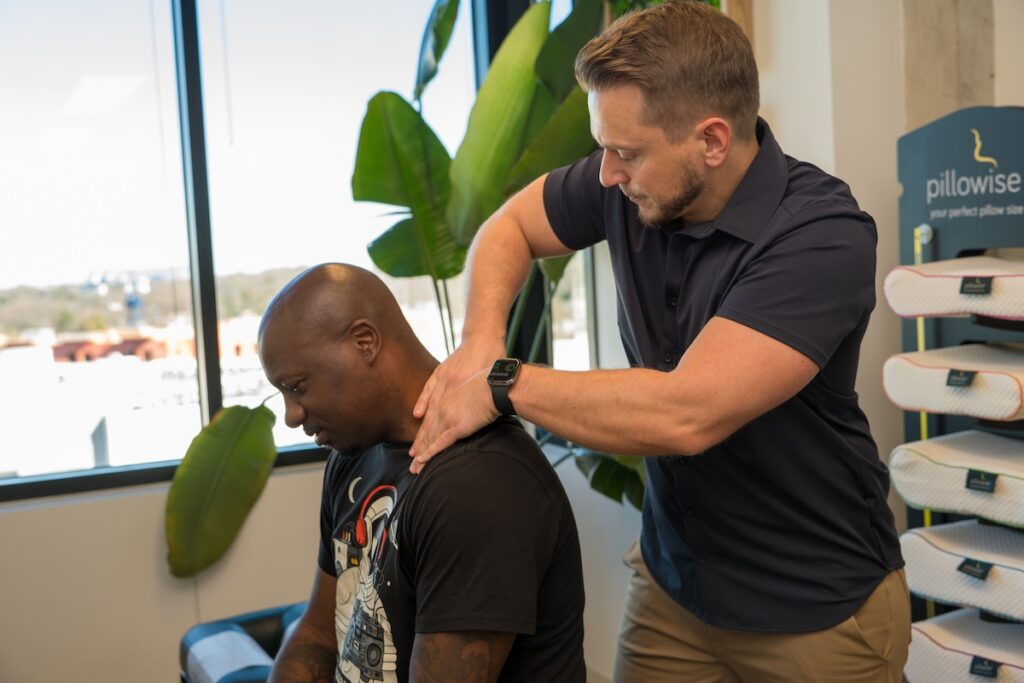
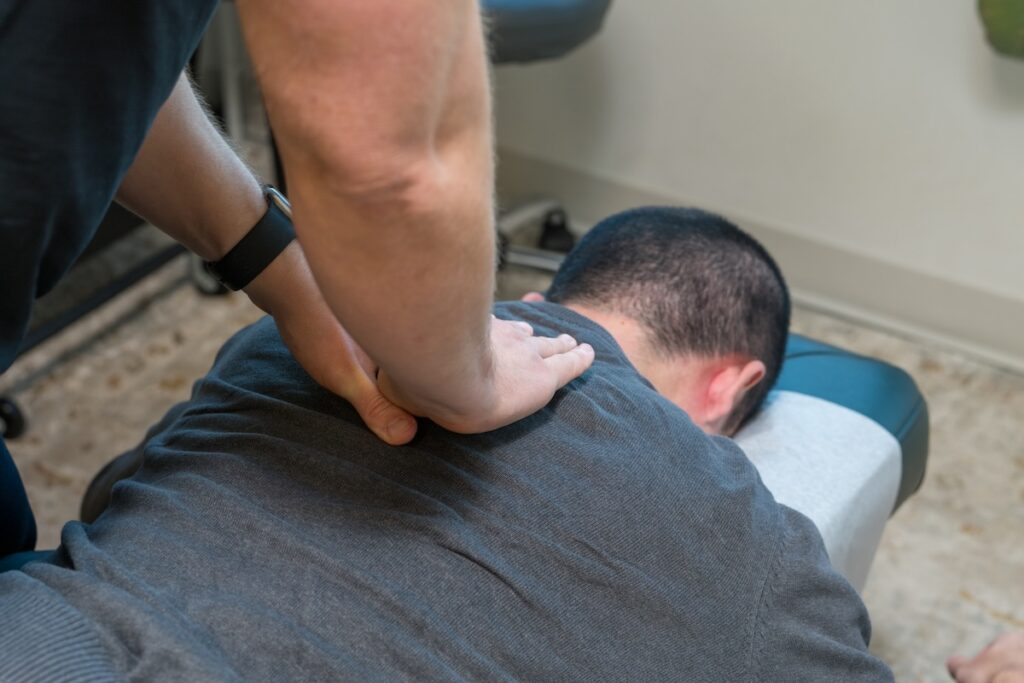
Care may include chiropractic adjustments, soft tissue work, mobility recommendations, and simple exercises or movement strategies you can use at home. The goal is not just temporary relief. The goal is to help you move better, feel better, and stay ahead of future flare-ups.
What Care Looks Like at Feel Good Chiropractic in Charlotte
At Feel Good Chiropractic, care starts with listening.
We want to understand what your day actually looks like. Maybe you work at a desk in Uptown, commute in from Ballantyne, spend weekends on the greenways, or train hard a few days a week. That context matters because your treatment plan should fit your real life, not some generic template.
From there, we perform a thorough evaluation. We look at posture, spinal motion, muscle balance, and basic movement patterns like bending, reaching, squatting, and rotating. If something does not look like a chiropractic case, or if we see signs you need another level of care, we will help point you in the right direction.
If chiropractic care is a good fit, we create a clear plan.
That plan may include adjustments, soft tissue work, mobility drills, and simple at-home strategies to help you build progress between visits. We track how you are doing, make changes when needed, and keep the process collaborative.
Our goal is not to keep you dependent on care forever. It is to help you understand your body better, move with more confidence, and have a plan that actually works in the context of your life.
Practical, At-Home Posture and Movement Tips
Supporting your spine does not have to be complicated. In most cases, the simplest habits are the ones that help the most when you actually stick with them.
Change positions every 30 to 45 minutes
If you stay in one position too long, your body usually lets you know. Stand up, stretch, take a short walk, or simply reset how you are sitting.
Improve your desk setup
Keep your screen near eye level, your keyboard close enough that your shoulders stay relaxed, and your feet supported on the floor. Small ergonomic changes can reduce a lot of daily strain.
Think “tall and easy”
You do not need stiff posture. Aim for gentle length through the spine with relaxed shoulders, an unclenched jaw, and steady breathing.
Use your hips when you lift
Whether you are picking up groceries, loading the dishwasher, or working in the yard, hinge at the hips and keep the load close to your body.
Walk daily
Walking is one of the easiest ways to support spinal health. Even 10 to 20 minutes per day can help improve circulation, joint motion, and overall stiffness.
Build strength and mobility together
A healthy back usually needs both. Hip strength, core control, and mobility through the hips, chest, and mid-back all make a difference.
Set up your sleep position better
A supportive mattress and a pillow that keeps your neck in a more neutral position can help reduce morning stiffness.
Bring your phone up higher
Hours of looking down add up quickly. Bringing your screen closer to eye level is a simple change that can reduce neck and upper back strain.
Warm up before yardwork or exercise
If your body tends to get tight or irritated, a few minutes of movement before activity can help things feel easier.
Breathe and stop bracing so much
A lot of people hold tension all day without realizing it. Sometimes one of the best posture changes is simply relaxing unnecessary tension.
When to See a Chiropractor for Back Pain
It may be time to get your back checked if pain or stiffness has lasted more than a couple of weeks, keeps returning, or is starting to affect everyday things like work, sleep, workouts, walking, or just getting through the day comfortably.
It can also be smart to come in before it becomes a bigger problem.
If your desk setup changed, your training has increased, or you can feel your body becoming tighter and more irritable over time, a chiropractic evaluation can help identify the issue early and give you a more practical plan.
Chiropractic is often a good first step because it is conservative, non-invasive, and focused on function. And if your exam suggests you need imaging, physical therapy, or medical evaluation, we will help guide you there.
Safety Check: Red Flags That Need Medical Care
Most back pain is not an emergency, but there are some symptoms that should be taken seriously.
Seek prompt medical care if you have:
- back pain after a major fall, accident, or trauma
- loss of bladder or bowel control
- numbness in the saddle area
- progressive weakness in one or both legs
- back pain with fever, unexplained weight loss, or a history of cancer
- severe, constant pain that is not improving at all
If something feels significantly off, it is always reasonable to get evaluated.
Myths and Facts About Posture and Back Pain
Myth: I need perfect posture all day
Fact: You do not need perfect posture. You need better support and more variety. Staying relaxed and changing positions often is more helpful than trying to hold one ideal position.
Myth: Pain always means damage
Fact: Not always. Pain is influenced by many things, including stress, sleep, inflammation, tension, and overall activity. A lot of back pain comes from irritated but recoverable tissues.
Myth: If I see a chiropractor, I will have to keep going forever
Fact: Care should be individualized. At Feel Good Chiropractic, we make recommendations based on your goals, track progress, and adjust as you improve. Some people like occasional tune-ups. Others come in only when needed.
Myth: The best thing for back pain is complete rest
Fact: In many cases, too much rest makes things worse. Gentle movement, walking, and mobility work are often more helpful than shutting everything down.
A Calm, Local Note
Life in Charlotte asks a lot from your body.
Long workdays, commuting, workouts, yardwork, weekends on the go—it all adds up. Paying more attention to your posture and spinal health is one of the simplest ways to reduce unnecessary strain and help prevent back pain from becoming a regular pattern.
You do not need a perfect routine. You just need a few smart habits, a little consistency, and the right support when your body is asking for help.
If you are dealing with recurring back pain, stiffness, or posture-related tension, Feel Good Chiropractic is here to help. We provide thoughtful, personalized chiropractic care in Charlotte with clear recommendations, practical treatment, and no-pressure guidance.
Frequently Asked Questions
What is the best sitting posture for preventing back pain?
The best sitting posture is one that feels supported and does not keep you stuck in one position too long. In general, keep your feet flat, hips slightly higher than your knees, and your screen near eye level.
Can chiropractic care help prevent back pain from desk work?
It can. Chiropractic care may help improve joint motion, reduce muscle tension, and make it easier to maintain better posture and movement habits throughout the workday.
How long does it take to improve posture?
Most people notice some improvement within a few weeks when they combine ergonomic changes, movement, and consistency. Lasting change happens through repetition, not perfection.
Is it normal for better posture to feel awkward at first?
Yes. New positions and movement patterns can feel unfamiliar at first. Aim for a posture that feels tall, supported, and relaxed rather than stiff.
Do I need imaging for back pain?
Often, no. Many cases of back pain improve with conservative care. Imaging is more likely to be needed when red flags are present or when symptoms are not improving as expected.
Should I avoid exercise if my back is sore?
Usually not completely. In many cases, gentle activity like walking and light mobility work can help. If pain is severe or worsening, it is best to get evaluated.
TL;DR
Spinal health and posture are not about sitting perfectly straight all day. They are about balance, movement, and reducing repeated strain.
A few simple habits—better desk setup, more frequent movement, improved lifting mechanics, and supportive chiropractic care when needed—can go a long way in helping prevent back pain.
If your back keeps flaring up, feels stiff all the time, or is limiting your day, it may be worth getting evaluated. If you are in Charlotte, Feel Good Chiropractic is here to help with thoughtful, conservative care and a plan that fits real life.
References
- American College of Physicians – Noninvasive Treatments for Low Back Pain
- National Center for Complementary and Integrative Health – Spinal Manipulation for Back Pain