
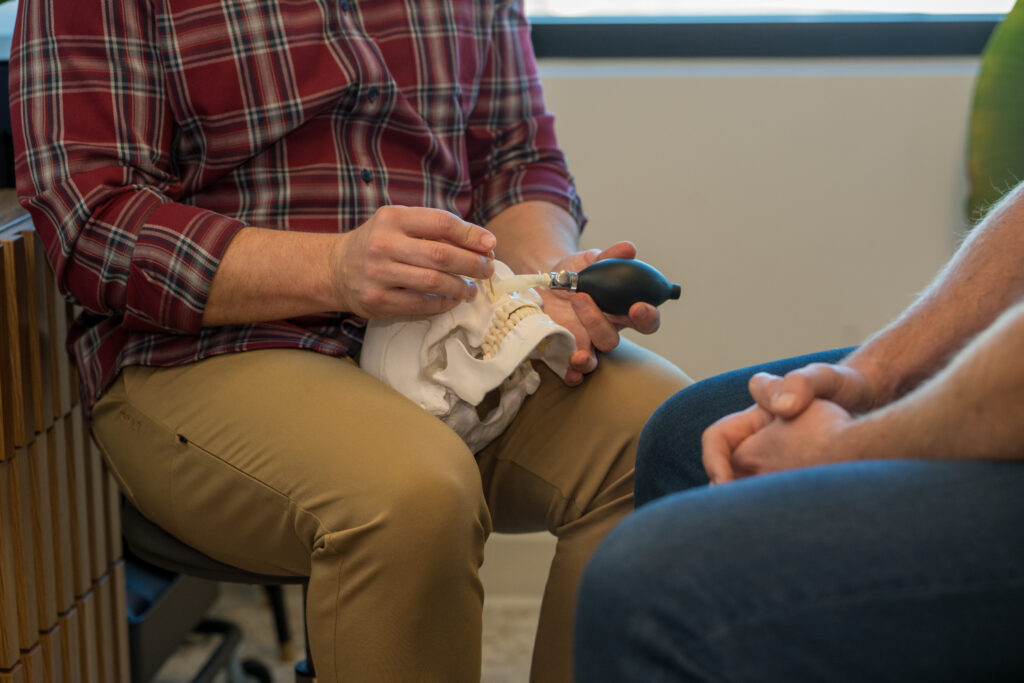

Here in Charlotte, many people come to Feel Good Chiropractic looking for non-surgical options to breathe better, especially when allergies, chronic congestion, or sinus pressure have become a constant frustration. Cranial Facial Release (CFR) is one technique that often comes up in those conversations. If you’ve ever felt like your nose just doesn’t move air the way it should, or you live with a persistent “stuffy head” feeling, it’s reasonable to wonder whether CFR could help. In this article, I’ll explain what CFR is, how it may influence nasal and sinus function, what the process looks like, and how it fits into a broader chiropractic approach to healthy breathing.
What is Cranial Facial Release?
Cranial Facial Release (CFR) is a non-surgical technique designed to help improve nasal airflow and sinus drainage by addressing restrictions within the nasal and cranial structures. During the procedure, a specially trained provider briefly inflates a small, sterile balloon inside the nasal passage to gently release areas that may be limiting normal movement and airflow. The process is quick, controlled, and focused on restoring function. CFR is not surgery, and it doesn’t replace medical or ENT care when that’s appropriate, but for the right person, it can be a helpful option for improving how the nose and sinuses function.
Table of Contents
- What Cranial Facial Release Is (and Isn’t)
- A Simple Look at Nasal and Sinus Anatomy
- How CFR May Influence Nasal and Sinus Function
- Potential Benefits and Realistic Limits
- How Chiropractic Care Fits In
- What to Expect If You Pursue CFR
- Simple Self-Care to Support Sinus and Nasal Health
- When to See a Chiropractor in Charlotte
- When to Seek Medical or Urgent Care
- Myths and Facts About Cranial Facial Release
- Final Thoughts from Feel Good Chiropractic
What Cranial Facial Release Is (and Isn’t)
Cranial Facial Release is a technique used to help improve nasal airflow by addressing restrictions within the nasal passages. During the procedure, a small, lubricated, sterile balloon is placed into a specific nasal pathway and briefly inflated—usually for a second or two—before being removed. This may be repeated in different locations depending on an individual’s anatomy and response. The process is quick, controlled, and guided by comfort.
CFR is not sinus surgery, and it’s different from ENT balloon sinuplasty. Balloon sinuplasty is a medical procedure designed to mechanically open sinus drainage pathways. CFR, on the other hand, is a conservative, non-surgical approach focused on improving nasal function rather than altering sinus anatomy.
People respond to CFR differently. Some notice an immediate change in airflow, while others experience more gradual or subtle improvements over a series of visits. CFR isn’t positioned as a cure for sinus disease or structural nasal issues—it’s simply one tool that may help improve how the nasal passages function when restriction is part of the problem.
A Simple Look at Nasal and Sinus Anatomy
Understanding how the nose and sinuses function helps explain why airflow can feel restricted in the first place and where conservative approaches may play a role. Air enters through the nostrils and passes through narrow internal structures, including the nasal valves and turbinates. These structures help warm, humidify, and filter the air before it moves deeper into the respiratory system. When the tissue lining these areas becomes irritated or inflamed, whether from allergies, environmental irritants, or illness airflow can feel noticeably reduced.
The sinuses are air-filled spaces within the facial bones that drain into the nasal passages through small openings. When those drainage pathways become inflamed or congested, pressure can build, sometimes leading to facial tension, headaches, or a feeling of fullness in the head. Because these spaces rely on narrow channels to drain properly, even mild swelling can have a noticeable impact on comfort and breathing.
The back of the nasal cavity also connects to the middle ear through the Eustachian tubes, which helps regulate ear pressure. This is why nasal congestion can sometimes be associated with ear fullness or pressure changes as well.
How CFR May Influence Nasal and Sinus Function
Cranial Facial Release is designed to influence nasal breathing and sinus drainage by improving how the tissues, nerves, and airflow function within the nose. While individual responses vary, CFR typically works through a combination of mechanical and neurological effects.
Soft tissue release and airflow:
The brief, controlled balloon inflation helps release tension in the soft tissues lining the nasal passages. When these tissues are less restricted, airflow can feel more open and balanced from side to side. This may also support more efficient sinus drainage, since the sinuses rely on small, narrow pathways to empty properly. Some people notice an immediate change in breathing, while others experience improvement more gradually over a series of visits.
Neurological and reflexive responses:
The nasal passages contain a dense network of sensory nerves that play a direct role in regulating airflow, pressure, and drainage. Stimulating these tissues can activate reflexes that influence breathing patterns, tear production, and facial pressure regulation. Responses like brief tearing or sneezing aren’t just incidental—they reflect activation of these neural pathways. For many people, this stimulation helps “reset” how the nose and surrounding structures respond, contributing to a clearer, more responsive airway and reduced feelings of congestion or facial pressure.
Breathing mechanics and nervous system tone:
Improved nasal airflow often leads to slower, more efficient breathing. When nasal breathing becomes easier, people are less likely to mouth-breathe or hold tension in the jaw and face. This can support a shift toward a calmer nervous system state and reduce the sense of tightness or strain through the upper airway. Over time, this change in breathing mechanics can make nasal breathing feel more natural and sustainable.
A realistic view of structure:
In adults, the cranial bones are largely stable, but still malleable. CFR is not about forcibly moving bones or dramatically altering facial structure. A more accurate way to understand the technique is that it influences soft tissues, neurological input, and functional space within the nasal passages and sinus drainage areas. The goal is improved function, not total structural manipulation.
Potential Benefits and Realistic Limits
People who respond well to Cranial Facial Release often notice a clear change in how their nose feels and functions. Common experiences include a sense of more open nasal passages, reduced facial pressure, and easier nasal breathing—sometimes immediately after a session. For some, this improvement carries over into better sleep, improved exercise tolerance, or simply feeling less congested throughout the day.
Responses vary. Some people notice subtle or short-term changes, while others experience more meaningful improvement over a series of visits. CFR tends to be most effective when restriction, tissue tension, or impaired drainage is contributing to symptoms rather than active infection or acute inflammation.
CFR is not appropriate in the presence of an active sinus infection, fever, uncontrolled nosebleeds, or immediately following nasal or sinus surgery. That said, having had sinus or nasal surgery in the past does not automatically rule someone out. In fact, some people seek CFR specifically because surgery did not fully resolve their breathing or congestion issues. In those cases, CFR may still be helpful by improving soft tissue function and airflow mechanics that surgery alone did not address.
Cranial Facial Release is a conservative technique focused on improving nasal function, not curing disease or dramatically altering anatomy. Its role is to help the nasal passages move air and drain more efficiently when restriction is part of the problem. For the right presentation, that improvement can be significant—even in people who have tried medications or undergone prior sinus procedures without lasting relief.
How Chiropractic Care Fits In
At Feel Good Chiropractic in Charlotte, our focus is on conservative, non-invasive care that improves how the body moves and functions as a whole. Nasal breathing doesn’t exist in isolation—it’s influenced by posture, muscle tension, and the mechanics of the spine, rib cage, and jaw. Even without Cranial Facial Release, chiropractic care can play a meaningful role in supporting easier, more efficient breathing.
Neck and upper back mobility:
Restriction through the cervical and upper thoracic spine can contribute to forward-head posture and increased tension through the throat, jaw, and upper airway. Gentle chiropractic adjustments and mobilization help restore more balanced posture and reduce unnecessary strain that can interfere with comfortable breathing.
Jaw tension and TMJ mechanics:
Clenching and grinding are common, especially during periods of stress, poor sleep, or seasonal allergies. Addressing jaw mechanics and the surrounding muscles can reduce tension across the cheeks, temples, and face, often making nasal breathing feel more natural and less effortful.
Rib and diaphragm function:
Breathing is a mechanical process. If the ribs don’t move well or the diaphragm is restricted, breathing becomes shallow and inefficient. Improving rib motion supports fuller, more relaxed breathing patterns, which can reduce upper airway strain and complement nasal breathing.
Education and daily habits:
Posture, sleep position, and habitual tension patterns matter. We guide patients on simple, practical strategies—like posture breaks, sleeping positions that encourage nasal breathing, and gentle home techniques to reduce neck and jaw tension. These small adjustments tend to matter most during Charlotte’s high-pollen seasons, when congestion is already working against you.
When CFR is part of the conversation, chiropractic care helps create a more supportive environment for breathing by addressing the structural and mechanical factors that influence airflow. The goal is not isolated treatment, but a coordinated approach that supports how your body breathes, moves, and recovers.
What to Expect If You Pursue CFR
Before beginning CFR, a trained provider will review your health history, make sure the technique is appropriate for you, and explain exactly how the procedure works. You’ll have a clear understanding of what the session feels like, what kind of response is typical, and how to care for yourself afterward. There should be no surprises.
During the session, a small, sterile balloon is placed into a specific nasal passage and briefly inflated—usually for one to two seconds—before being removed. This may be repeated in a few areas based on your anatomy. Most people describe the sensation as a quick pressure or fullness, often accompanied by watery eyes or a brief urge to sneeze. These responses are common and usually pass quickly.
After the session, many people feel noticeably clearer right away, while others notice more subtle changes over the next day or two. Light activity, good hydration, and nasal breathing are generally encouraged for the rest of the day. Your provider will let you know if there’s anything specific you should avoid based on your individual response.
Simple Self-Care to Support Sinus and Nasal Health
Whether or not you pursue Cranial Facial Release, daily habits play a meaningful role in how your nose and sinuses feel, especially with Charlotte’s spring and fall pollen seasons and humid summers. Small, consistent practices often make breathing feel easier and help reduce unnecessary congestion.
- Support nasal hygiene: Use gentle saline sprays or rinses to keep the nasal passages clear, and stay well hydrated to support healthy mucus flow.
- Manage your environment: A clean humidifier during dry months and avoiding irritants like smoke or strong fragrances can reduce nasal irritation. Using an air purifier and keeping bedding clean may also help limit allergen exposure.
- Mind posture and jaw tension: Take regular posture breaks throughout the day. Sit tall, let the jaw relax, keep the tongue resting gently on the roof of the mouth, and breathe lightly through the nose when possible.
- Use warmth to ease pressure: Warm showers, facial steaming, or a warm compress over the cheeks and forehead can help reduce sinus pressure and promote comfort.
- Optimize sleep position: Sleeping on your side with a supportive pillow that keeps the neck neutral can encourage nasal breathing and reduce nighttime congestion.
These simple strategies won’t solve every breathing issue, but they can make a noticeable difference, especially when combined with care that addresses how the body moves, breathes, and handles stress.
When to See a Chiropractor in Charlotte
A chiropractic evaluation may be helpful if you notice recurring sinus pressure that seems connected to neck stiffness, desk posture, or jaw clenching. Frequent tension headaches around the eyes or forehead, habitual mouth-breathing linked to postural strain, or a sense of upper-back tightness that limits a full, relaxed breath are also common reasons to get checked.
At Feel Good Chiropractic, we look at how the neck, jaw, ribs, and posture work together as a system. The goal is to identify mechanical patterns that may be contributing to breathing discomfort and address what’s within our scope to improve function. When collaboration makes sense—whether that’s involving an ENT or discussing Cranial Facial Release—we’ll bring that into the conversation directly. Clear assessment and appropriate care tend to produce the best outcomes.
When to Seek Medical or Urgent Care
Some symptoms are best evaluated by a medical provider rather than managed with conservative care. Seek prompt medical attention if you experience a high or persistent fever, worsening facial swelling or redness, frequent or heavy nosebleeds, thick or foul-smelling nasal discharge, severe one-sided nasal blockage, a sudden loss of smell unrelated to congestion, or a new, intense headache. Head or facial trauma and signs of an acute infection should also be addressed medically without delay.
Final Thoughts from Feel Good Chiropractic
Helping people in the Charlotte community breathe, move, and live more comfortably is at the core of what we do. Cranial Facial Release is one option some people explore when nasal airflow or sinus pressure has become a recurring frustration. It isn’t a one-size-fits-all solution, but when restriction is part of the problem, it can be a useful tool in improving how the nose and upper airway function—especially when paired with smart daily habits and supportive care.
If you’re not sure where to begin, we start by listening and evaluating how your neck, jaw, ribs, and posture are working together. From there, we outline a clear, conservative plan based on what we find. And when medical care or collaboration is the appropriate next step, we’ll be straightforward about that and help guide the process. The goal is simple: thoughtful care, honest guidance, and better function.
FAQs
Is cranial facial release safe?
When performed by a properly trained provider using sterile equipment and appropriate screening, Cranial Facial Release is generally well tolerated. As with any procedure involving the nasal passages, temporary discomfort or a brief nosebleed can occur, but serious complications are uncommon. A thorough history and clear explanation should always come first.
Does cranial facial release treat sinus infections?
CFR does not treat an active sinus infection. If you’re dealing with fever, acute illness, or signs of infection, medical care is the priority. That said, CFR may be helpful for people with chronic or recurrent sinus issues, especially when congestion or poor drainage continues despite medications or prior treatment. In those cases, improving nasal airflow and drainage mechanics can make a meaningful difference.
How many CFR sessions do people usually need?
Some people notice improvement after a single session, particularly in airflow or pressure. However, CFR is typically performed as a series of five sessions, which allows changes to build and stabilize over time. Occasionally, additional visits may be recommended on a case-by-case basis depending on response, anatomy, and goals.
Is CFR the same as balloon sinuplasty?
No. Balloon sinuplasty is a medical procedure performed by an ENT to mechanically open sinus drainage pathways, often under imaging guidance. Cranial Facial Release is a conservative, non-surgical technique focused on improving nasal airflow and function by influencing soft tissues and neurological input within the nasal passages. The two approaches serve different roles and are not interchangeable.
Can children receive cranial facial release?
Yes, in appropriate cases. CFR can be performed on children by providers specifically trained to work with pediatric patients. Careful screening, informed consent, and age-appropriate technique are essential. As with adults, it’s important to discuss the child’s history, goals, and any medical considerations before proceeding.
TL;DR
- Cranial Facial Release (CFR) is a conservative, non-surgical technique that uses brief intranasal balloon inflation to help improve nasal airflow and sinus drainage mechanics.
- Many people notice easier nasal breathing and reduced facial pressure, sometimes right away. Responses vary, and CFR works best when restriction and impaired drainage are part of the issue.
- Chiropractic care supports breathing by improving neck, jaw, rib, and posture mechanics and by reinforcing habits that promote efficient nasal breathing.
- Medical care comes first for fever, severe facial pain, heavy or persistent nosebleeds, or signs of acute infection. Conservative care complements—not replaces—necessary medical treatment.
- At Feel Good Chiropractic in Charlotte, our role is to help you understand your options, assess how your body is functioning, and build a clear, sensible plan—collaborating with other providers when appropriate.


